
Top Signs You Need Garage Door Service – Don’t Ignore These
The signs you need garage door service are rarely dramatic at first. A door that takes two seconds longer to open than it did six months ago isn’t “just getting old” – it’s a measurable sign that spring tension has dropped and is now overloading your opener motor, and that motor is quietly burning toward failure. The trick is reading each symptom as a point on a mechanical timeline: which part is failing, and how far it is from full breakdown. If you’d rather not play detective on a system under extreme tension, call (866) 947-9572.
Why Garage Door Problems Follow a Timeline, Not a Checklist
Most homeowners treat garage door symptoms like a checklist: one noise, one fix. In our experience, a garage door tells you exactly which component is under strain through the way it moves, sounds, and reverses. A slow door points to spring tension loss. A jerky door points to a worn cable or a seized roller. A single loud bang points to a torsion spring that has already snapped. Same door, three different components, three completely different timelines.
That distinction matters because it decides how fast you need help. A tired-sounding roller in Thornton can wait for a scheduled appointment. A door that reverses halfway down should not. And a snapped spring means the door won’t open at all under its own tension – that’s a same-day problem, not a next-month one.
Here’s how we sort the symptoms by urgency:
- Scheduled appointment: noisy rollers, a tired-sounding opener, one remote that needs a battery, a cosmetic dent in a steel panel
- Same-week service: slow travel, jerky movement, a door that won’t close the last few inches, a bottom seal that’s cracked through
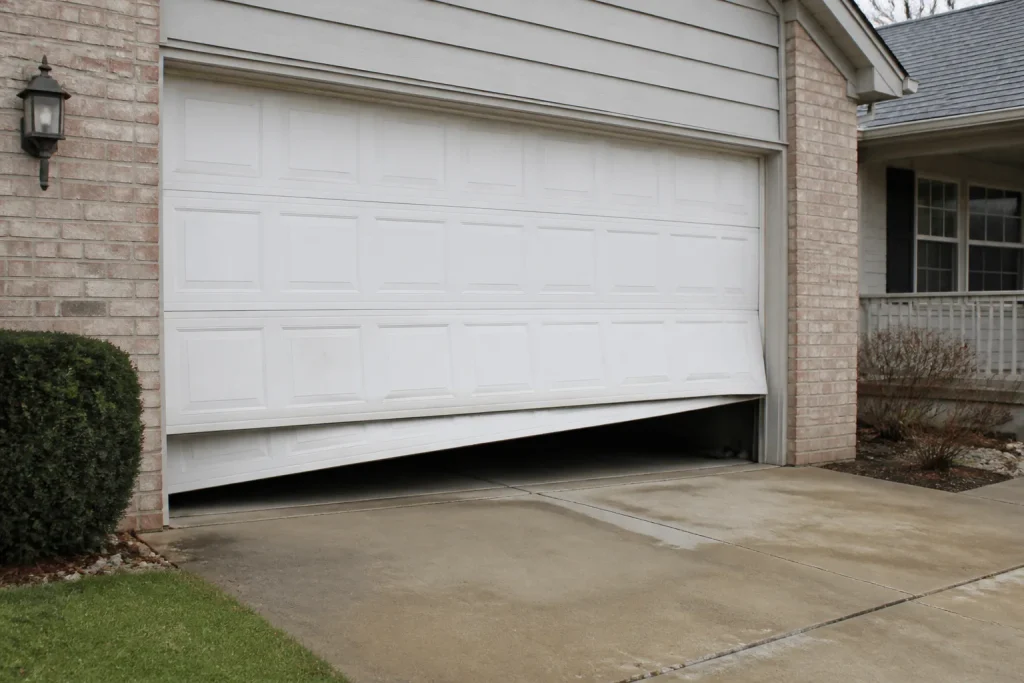
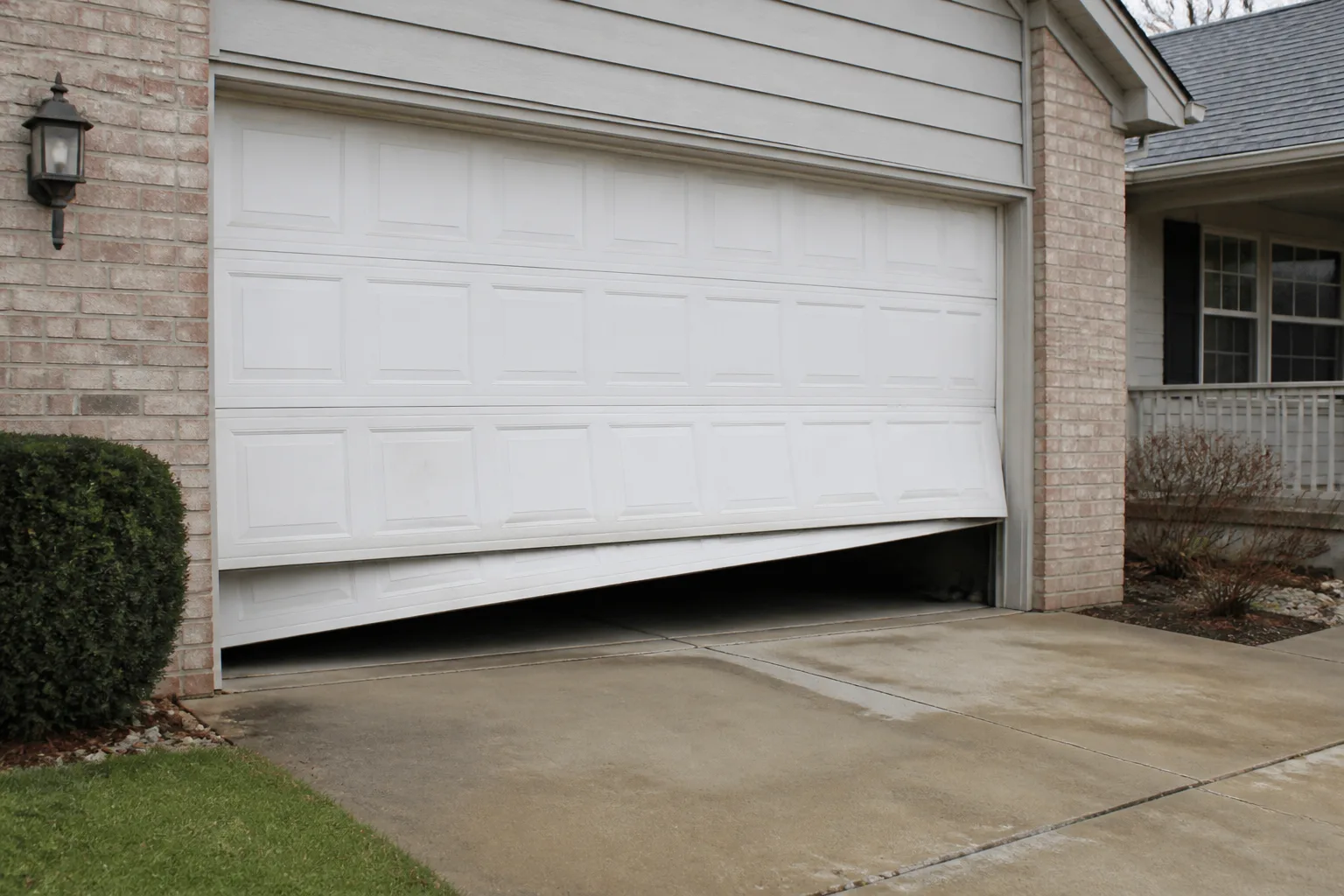
- True emergency: a loud bang from the spring, a door hanging crooked, a door stuck half-open, any cable that looks frayed
The gap between “scheduled” and “emergency” is where most damage happens. A slow door that goes unrepaired is a spring and an opener repair waiting to happen – and in Thornton’s freeze-thaw winters, that gap closes faster than you’d expect.
Symptom #1: Slow or Struggling Travel
A slow, laboring garage door almost always points to one of two parts: the torsion springs have lost tension, or the opener motor is straining to compensate. Springs carry the weight of the door. When they weaken, the motor has to lift more than it’s rated for, and it does that work a few degrees hotter with every cycle. A door that used to rise smoothly in about three seconds and now takes five is telling you the spring has started to give.
What makes this tricky is that the slow door doesn’t feel broken. It still opens. It still closes. Your Clopay door looks the same from the curb. But the opener is the part absorbing the failure, and openers don’t fail gracefully – they strip gears or burn out a capacitor at the worst possible time. A door that feels “tired” and a door with a spring problem are often the same door.
Springs are under extreme tension, and adjusting or replacing them is not a DIY repair. This is one of the most mechanically dangerous components in a residential garage system. A trained technician is the right call here, every time. If the door still opens and closes but has clearly slowed, that’s a scheduled appointment. If it stops mid-travel or won’t lift at all, treat it as urgent and call (866) 947-9572.
Symptom #2: Jerky Movement, Grinding, or a Crooked Door
Jerky, uneven movement is your door’s way of pointing at cables and rollers. A door that moves in fits and starts, catches on one side, or grinds against the track has a specific mechanical problem: a worn cable, a seized roller, or a drum that’s starting to bind. Left alone, a seized roller will wear a groove into the track; a worn cable can snap. And a door that looks perfectly straight from the street can still have a cable fraying on the back side of the drum.
This is the symptom bracket where a visual check tells you much less than you think. The parts that fail first are usually out of sight:
- Frayed cables – wire strands breaking a few at a time, hidden behind the door or inside the drum
- Worn drums – the cable spools unevenly, so the door tilts on one side
- Cracked end-bearing plates – the plates at the top of the track that hold the torsion bar
We’ve seen a door pass a quick glance easily and still have a cable on its last few strands. If your Amarr or Wayne Dalton door jerks, or if you can hear grinding, don’t wait for it to stop moving entirely – that’s a same-week call, and it’s better dealt with before the cable gives. If a cable looks frayed right now, stop operating the door and call a professional.
Symptom #3: A Loud Bang – That Was Your Spring, Not Your Opener
A single loud bang from the garage, followed by a door that won’t open, is almost always a broken torsion spring – not the opener. Homeowners often assume the motor finally died. In our experience, the opener is fine. The spring snapped, the door lost its lifting tension, and the opener is now trying to lift a door that weighs far more than it was ever designed to handle.
Don’t test an opener on a door that has just made a bang and stopped working. Running the motor against a dead spring is how a repair becomes a replacement. A broken torsion spring is a true emergency: the door won’t lift safely, and depending on the door position it can leave your home open. The spring itself is under extreme tension even after it breaks, so this is not a component any homeowner should touch.
For a broken spring in Thornton, that’s a same-day call. This is where specialist spring knowledge matters. Springs are their own mechanical craft – measuring the wire gauge and coil count, matching a replacement, and setting the tension correctly. A generalist handyman has no business here, and the door will tell you so within a few cycles. If you hear that bang, call (866) 947-9572, close the garage door access, and don’t operate it again.
Symptom #4: Opener-Specific Warnings You Might Be Misreading
Your opener often reports a problem before the door shows one – and the signs differ by brand. A blinking indicator light, a display code, or a door that reverses on its own is the opener’s built-in way of saying “the force required to move this door has changed.” That’s usually spring or track wear, not a remote problem. A fresh battery in the remote won’t fix a force-limit trip.
What each brand tends to tell you:
- LiftMaster – codes or indicator patterns that often trace back to up-force or down-force limits being tripped by a stiffening door
- Chamberlain – a MyQ app alert that the door opened or closed unexpectedly, which can mean a misreading travel limit or a reversing door
- Genie – a force-limit trip that stops the door mid-travel and looks, to the homeowner, like the motor is simply weak
We work on whatever’s on your garage, from LiftMaster to Genie, and one of the most common calls in Thornton is an opener that’s been blamed for a door problem. If you’re seeing repeated alerts or the door reverses on its own more than once, that’s a same-week call. A proper garage door opener repair starts with checking the door, not just the motor.
Symptom #5: Seasonal Warning Signs in Thornton
Thornton’s freeze-thaw cycle does specific damage to garage doors, and it has a calendar. Every time the temperature swings across the freezing point, the door’s steel panels expand and contract, and the bottom seal flexes with them. That’s why certain failures cluster in certain seasons – it isn’t coincidence, it’s the door reacting to the weather.
Here’s the pattern we see across the year in Thornton:
- Bottom seal cracking: the rubber or vinyl seal takes the freeze-thaw flex first, cracking and letting cold air and moisture in at the seams
- Steel panel fatigue: repeated expansion and contraction stresses panel joints and hinges, showing up as sag or gaps over several winters
- Lubricant breakdown: cold stiffens grease in rollers, hinges, and the opener drive, so the door gets louder when it’s colder
- Spring tension drift: thermal cycles subtly change how a spring behaves, and an aging spring loses tension faster through a hard winter
The practical takeaway: if your door gets noticeably louder or slower in the cold and stays that way into spring, that’s your maintenance call. If a Thornton door is stiff in the cold but eases up once it warms, it’s a sign to get it checked – not leave it. This is also a good time to think about a new bottom seal before the next freeze, which never gets cheaper to ignore.
When to Call a Pro
Here’s the honest cutoff. You can replace a remote battery, clean and lubricate rollers, and sweep debris out of the track yourself. You should not touch springs, cables, or a door that has lost its balance – those are the parts that cause serious injury when they fail. Springs and cables are under extreme tension, and they can release without warning. That’s the line.
If you’re unsure which bracket a symptom falls into, that uncertainty is itself a reason to call. A door that has started reversing, jerking, or banging should be looked at, not limped along. We answer 24/7 and offer fast dispatch from 7am to 7pm, Sunday through Friday.
Related services in Thornton: For a door that’s stopped opening on its own, see garage door repair. For a door at the end of its life, see garage door installation. And for everything else, the specialists at Thornton Garage Door Repair Pros can point you in the right direction.
The Bottom Line
Read your garage door as a timeline, not a checklist. Slowing travel means spring tension loss and an opener under strain. Jerky movement means cable and roller wear. A loud bang means a broken spring. Opener codes usually mean the door, not the motor. And in Thornton, the freeze-thaw calendar accelerates all of it. Catch the early symptoms and you book a normal appointment; ignore them and you’re making an emergency call.
Our technicians have up to 12 years of experience across LiftMaster, Chamberlain, Genie, Clopay, Amarr, Wayne Dalton, Craftsman, and Raynor systems – we work on whatever’s on your garage, with no brand bias and no upsell pressure. If you’re in Thornton and your door is showing any of these signs, Thornton Garage Door Repair Pros offers free estimates; estimate costs are set by a free written quote before any work starts, and the written estimate is what you pay. Call (866) 947-9572 for a free estimate.
Frequently Asked Questions
The clearest signs are a door that travels slower than it used to, jerky or grinding movement, a single loud bang from the spring, and opener codes or repeated reversals. If any of these appeared recently, get the door checked. Call (866) 947-9572 for a free estimate – estimates are free and the written quote sets the price before any work starts.
A loud bang is almost always a broken torsion spring, not the opener. Any spring or cable problem is under extreme tension and is not a DIY repair. Call (866) 947-9572, and don’t operate the door until a technician has looked at it.
A broken spring, a frayed cable, or a door stuck half-open is an emergency. A slow, jerky, or noisy door is a same-week call. If you’re unsure, call (866) 947-9572 and describe what you’re seeing. We answer 24/7 with fast dispatch from 7am to 7pm, Sunday through Friday.
Yes. Frayed cables, worn drums, and cracked end-bearing plates are often out of sight, so a visually straight door can still be mechanically dangerous. Springs and cables are under extreme tension and can release without warning. Call (866) 947-9572 for a professional inspection – the price is set by a written estimate before any work begins.
Written by the team at Thornton Garage Door Repair Pros.
Need Garage Door Help?
Call Thornton Garage Door Repair Pros - the local pro we connect you with is licensed and insured, here with fast help in Thornton.
(866) 947-9572