
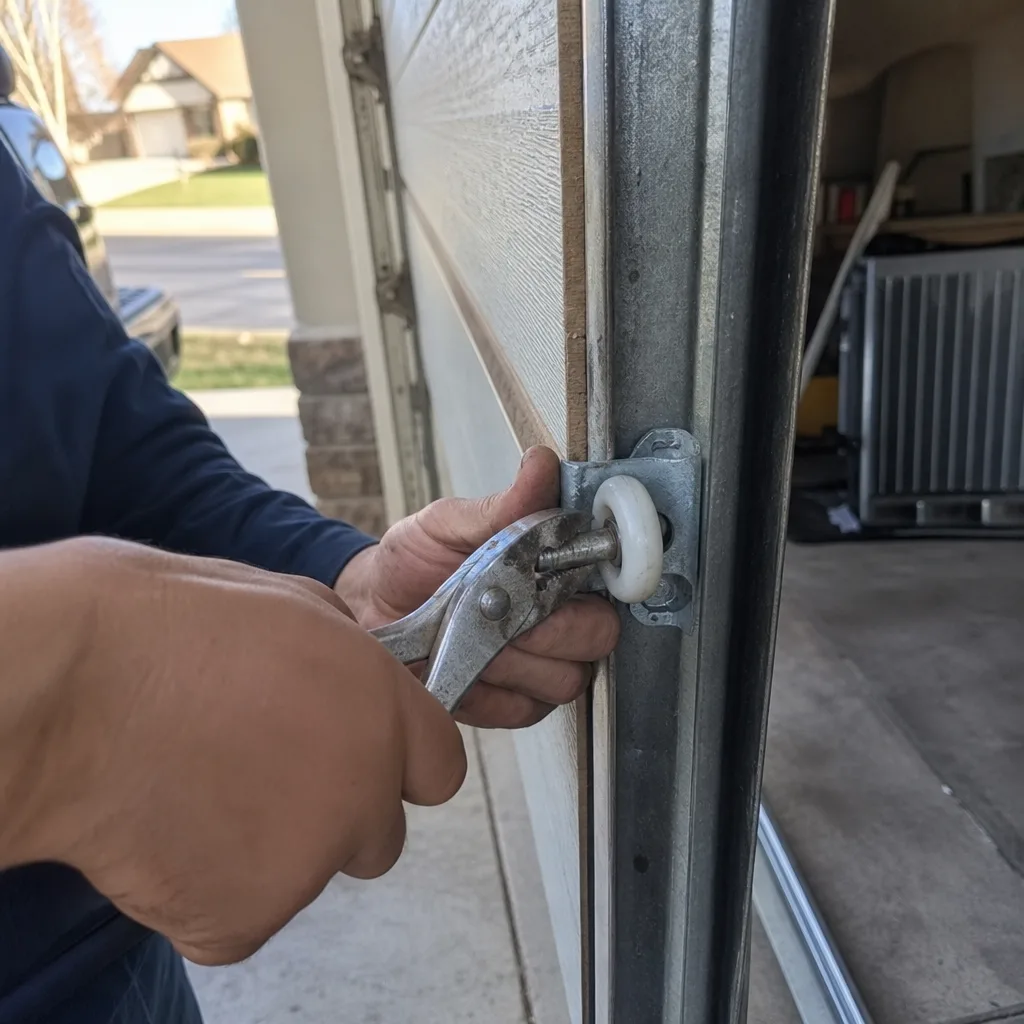
Last updated November 23, 2026
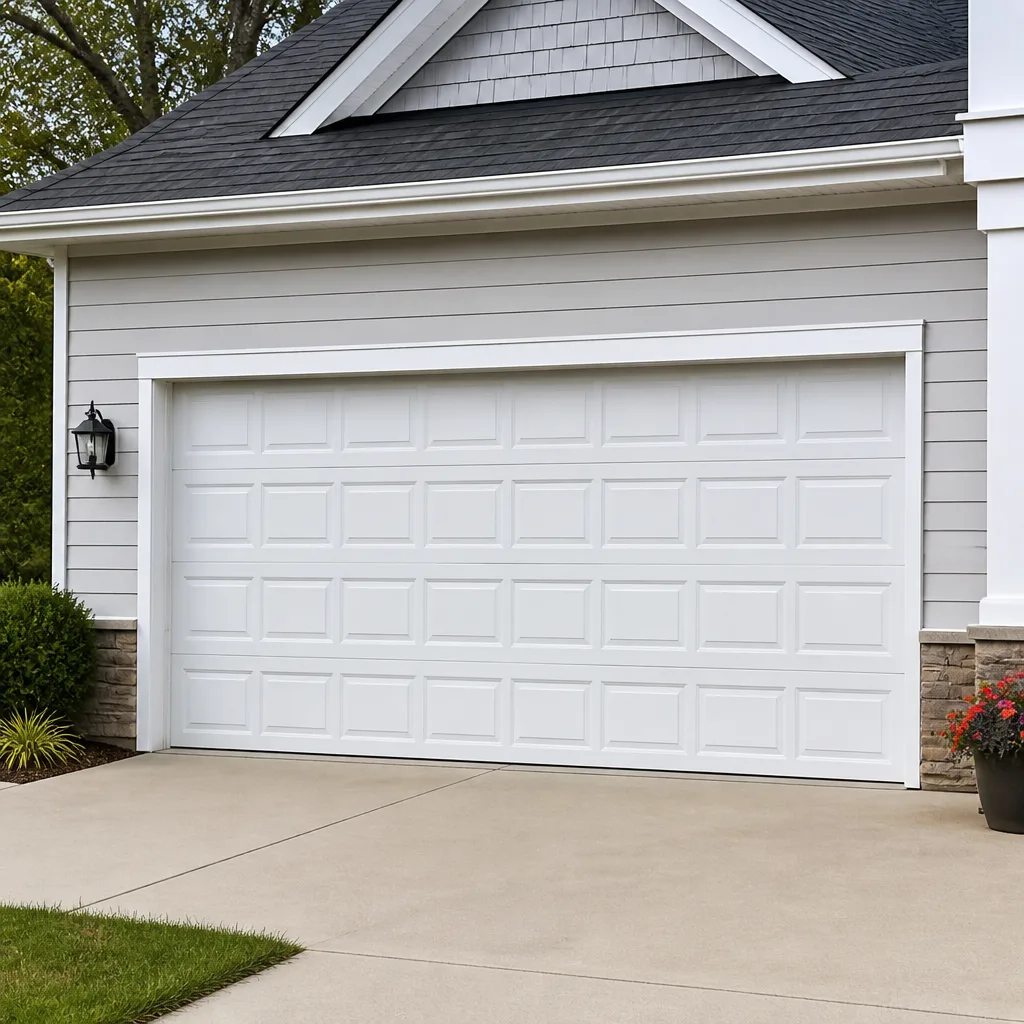 Raised-panel steel
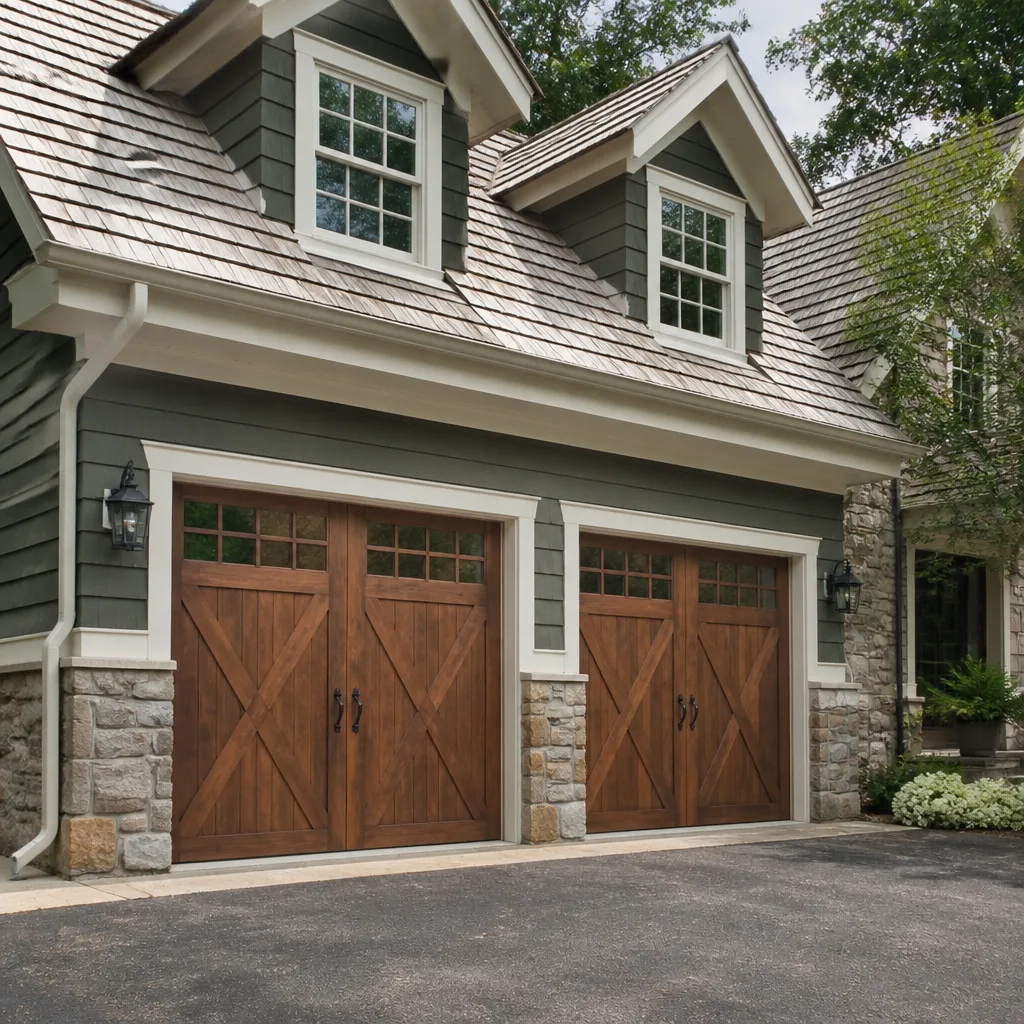 Carriage house
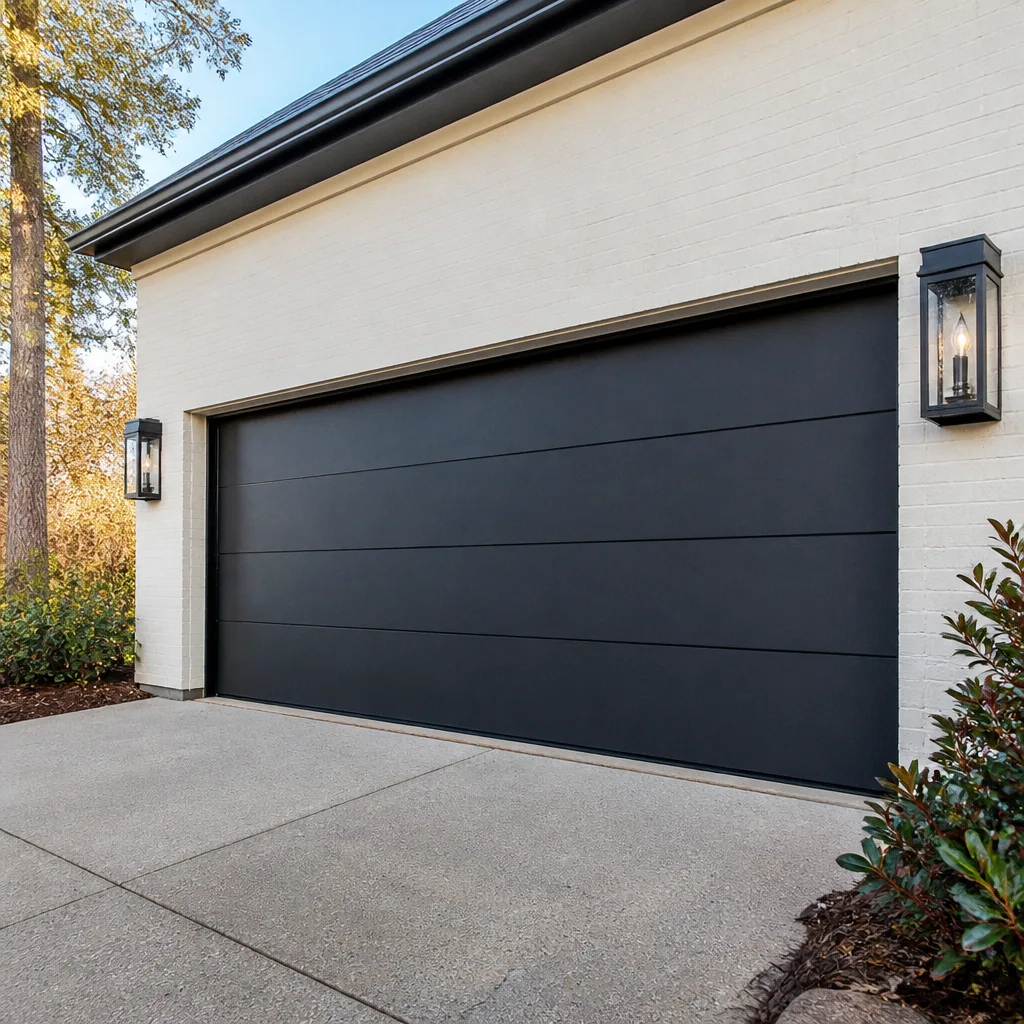 Modern flush
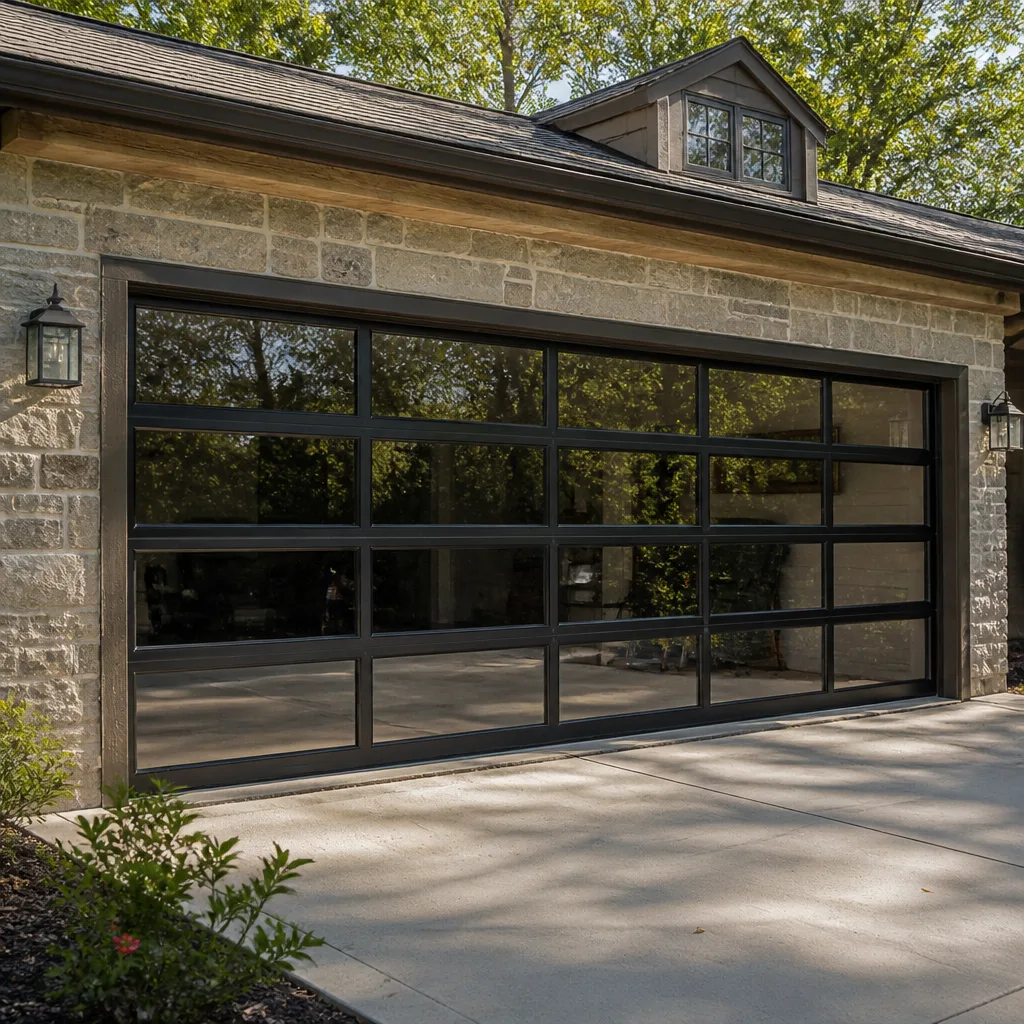 Full-view glass
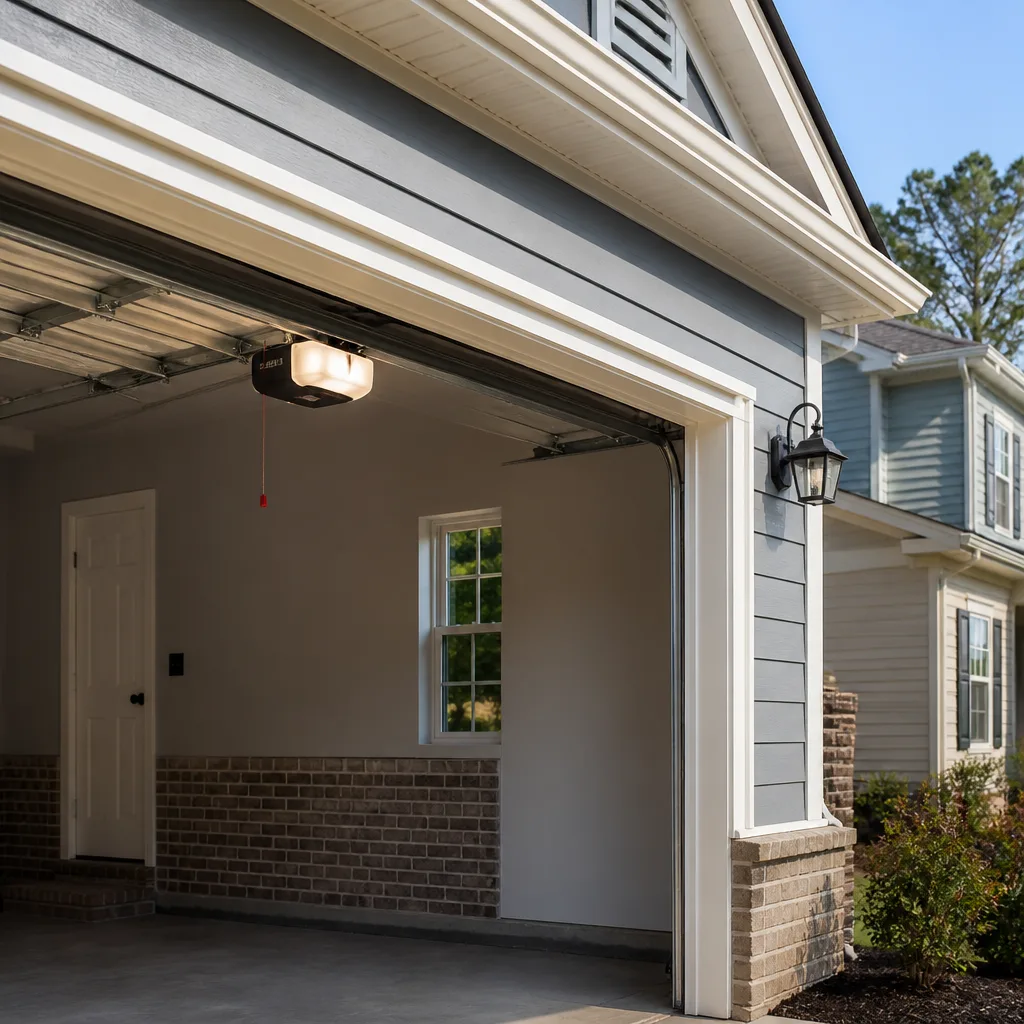 LiftMaster openers
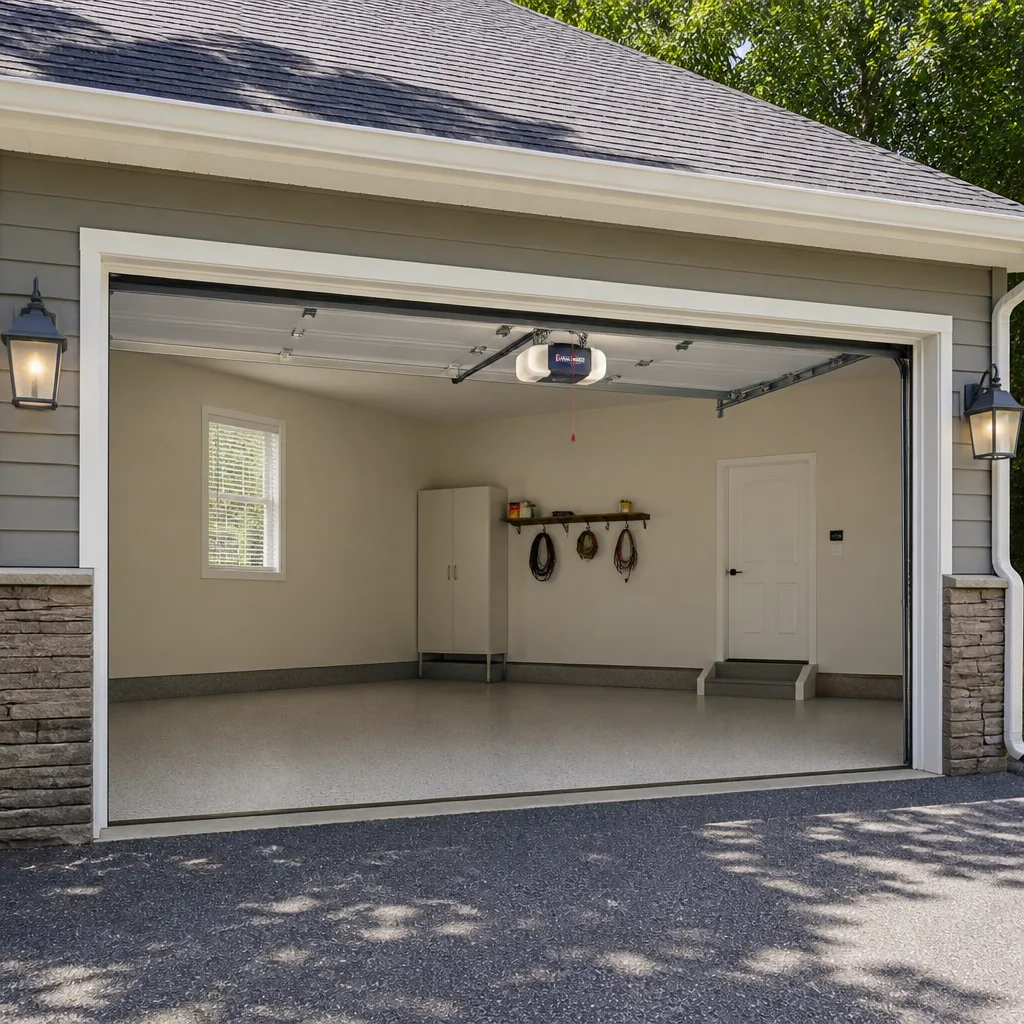 Chamberlain openers
Full 25-point door and opener safety check with every visit - springs, cables, rollers, tracks, and your LiftMaster or Chamberlain opener included
You get a price before we start. It does not change when the pro arrives.
Get your free estimateGarage Door Warning Signs: A Thornton Homeowner’s Reference Guide
Most homeowners treat every garage door symptom the same way: they wait, then they call someone when the door stops working entirely. That’s backwards. A door that’s moving slower than it used to isn’t being lazy. Its torsion spring is losing tension, which means your opener motor is now lifting weight it was never designed to carry. Ignore that long enough and you’re replacing an opener alongside the spring. This guide separates the warning signs that mean “watch it” from the ones that mean “stop using this door today,” and it explains the mechanical reason behind each classification so you can judge for yourself what you’re looking at. We’ve written it specifically for Thornton homeowners dealing with Front Range temperature swings.
Quick Answer
Garage door warning signs fall into three tiers. Watch-it signs include mild squeaking, a slightly slower door, or a small gap in the weatherstripping. Schedule-soon signs include grinding rollers, visible cable fraying, and an opener that strains or reverses. Stop-now signs include a snapped spring, a cable that has come off its drum, a door hanging unevenly, and any door that reverses without a clear obstruction. Springs and cables are under extreme tension, so those are never DIY repairs.
Styles & brands we work with
- Raised-panel steel
- Carriage house
- Modern flush
- Full-view glass
- LiftMaster openers
- Chamberlain openers
Table of Contents
- The Severity Index: Watch It, Schedule Soon, or Stop Now
- Reading the Four Sounds Your Door Makes
- What You Can Actually See: A Visual Inspection Checklist
- Spring and Cable Warning Signs: The Ones That Matter Most
- Opener Symptoms That Point to a Motor or Logic Board Problem
- How Thornton’s Climate Hides Signs in Summer and Amplifies Them in Winter
- Which Fixes Are DIY and Which Are Not
- A Seasonal Watch List for Thornton Homeowners
The Severity Index: Watch It, Schedule Soon, or Stop Now
Not every symptom deserves the same response. The mistake homeowners make is lumping a squeaky hinge together with a snapped spring, then either panicking over both or ignoring both. Here’s how we sort symptoms, and why the mechanical reason matters more than how loud the noise is.
Tier 1: Watch It
These are signs of normal wear that you should note and monitor. The door still operates safely.
- Light squeaking at the hinges or rollers
- A small gap where the weatherstripping meets the floor
- A door that sounds slightly different in cold weather
- Minor paint or finish wear on the bottom panel
These are friction and seal issues. A squeal usually means a dry hinge or roller bearing. A floor gap means the bottom seal is compressed or brittle. Neither involves a load-bearing component, so you can keep using the door while you plan the fix.
Tier 2: Schedule Soon
These indicate a component is wearing toward failure. The door still works, but the margin for error is shrinking.
- Grinding or rumbling as the door moves
- A door that moves noticeably slower than it used to
- Visible fraying or slack on a cable
- An opener that strains, hesitates, or gets louder under load
- Rust scaling on the spring coils
A grinding roller means the bearing has seized and metal is grinding on metal. That’s friction transferring heat and wear into the track and the hinge. A slow door means the spring has lost tension and the motor is compensating. Both are progressive. Left alone, they accelerate into Tier 3.
Tier 3: Stop Using the Door Now
These mean a component has failed or is loaded and about to fail. Do not cycle the door.
- A snapped torsion or extension spring
- A cable off its drum or hanging loose
- A door hanging visibly crooked or sitting off the floor on one side
- A door that reverses without a clear obstruction in the path
- A loud bang followed by a door that won’t lift
When you find a Tier 3 sign, stop. A garage door spring repair is a job for a trained technician because the springs and cables hold the door’s full weight under extreme tension. A door that reverses on its own has a sensor or force-setting problem that can crush something or someone in the path. Both are cases where a technician needs to be there before the door moves again. If you’re dealing with any Tier 3 sign in Thornton, call us and we’ll get someone out.
Reading the Four Sounds Your Door Makes
Sound is the earliest diagnostic signal your door gives you, and each sound points to a different part. Homeowners describe them all as “noise,” but they’re completely different problems with different urgency.
1. Grinding
A low, rough grind as the door moves usually means a roller bearing has seized. The roller is no longer rolling; it’s dragging, and the shaft is grinding inside the hinge. This is common on older doors where the rollers have never been replaced. A seized roller wears the track and the hinge and can eventually pop a hinge loose. It’s a Tier 2 sign: schedule it, don’t ignore it, and it’s usually a straightforward roller and hinge replacement.
2. Popping or Twanging
A pop, twang, or snap is a cable or spring sound. A popping cable can mean the cable is slipping on the drum or has jumped a groove. A twang from the spring area can mean coils are binding and releasing. Caught early, this is a cable and drum inspection. Caught late, it’s a snapped cable and a door that’s dropped on one side. Treat any new popping from the spring or cable area as a Tier 2 sign and get it looked at soon.
3. Scraping
Scraping is a panel or seal contacting something. The bottom panel may be scraping the floor because the door is out of adjustment, or a panel may be rubbing the frame after the track has shifted. Scraping also shows up when the track has been knocked out of plumb. This is usually an adjustment, but it can indicate a bent panel or a track that’s pulling loose from the wall, which is why we check it rather than just lubricating it.
4. Straining From the Opener
A motor that hums louder than it used to, hesitates at the start, or gets hot is working harder than it should. Most of the time that’s not the opener’s fault. It’s a door that’s gone heavy because the spring has lost tension. A Genie or LiftMaster unit that used to lift quietly and now strains is telling you the door is out of balance. If you replace the opener without addressing the door balance, the new opener inherits the same overload.
What You Can Actually See: A Visual Inspection Checklist
You don’t need to be a technician to catch most of these. You do need to look, and you need to know what you’re looking at. Here’s a walk-around you can do safely with the door closed and the opener disconnected at the wall.
The Five Visual Cues
- Cable slack at the drum. Look at the cable wrapped around the drum at each upper corner. It should be tight and evenly wound. Slack means the cable has slipped or the spring tension is off. Do not touch it; note it and call.
- Rust scaling on spring coils. A light surface haze is normal. Flaking, scaling rust means the steel is pitting and the spring is closer to failure than a clean one. This is a Tier 2 sign even if the door still works.
- Daylight gaps in weatherstripping. With the door closed, look for light under the bottom seal and around the frame. Light under the door means the seal is compressed or the door is sitting crooked.
- Track alignment. Stand back and look at both tracks. They should be parallel and plumb. A track that has bowed or pulled away from the wall is a sign the door has been hit or the mounting has loosened.
- Hinge and roller condition. Check a few hinges for loose screws and rollers for flat spots. A flat spot on a nylon roller means it’s seized and needs replacement.
The Balance Test
With the door closed, pull the manual release and lift the door halfway by hand. A balanced door should hold roughly where you leave it. If it falls, the spring has lost tension. If it takes force to lift and slams on the way down, that’s the same problem from the other direction. Don’t force it. If the door won’t hold, put it back down and stop using it.
If your walk-around turns up a loose track, a bent panel, or a hinge that won’t hold a screw, that’s the point to look into garage door repair rather than keep cycling the door.
Spring and Cable Warning Signs: The Ones That Matter Most
Springs and cables are the highest-stakes parts of the system, and they’re the reason so many warning signs exist in the first place. A torsion spring above the door or extension springs along the tracks hold the door’s full weight. When they lose tension, the opener takes the load. When they fail, they fail fast and loud.
What a Failing Spring Looks Like
- A visible gap in the coil, usually with two halves separated on a torsion spring
- A door that lifts a few inches and stops
- A door that feels much heavier than it used to
- A loud bang from the garage with no other obvious cause
- Rust scaling on the coils, which signals pitting before failure
What a Failing Cable Looks Like
- Frayed strands near the drum or the bottom bracket
- Cable hanging loose on one side
- A door sitting crooked or off the floor on one side
- A popping sound as the door moves
We treat spring repair as its own dedicated service because it’s one of the most mechanically dangerous parts of a residential garage system. Springs and cables are under extreme tension. A homeowner who tries to release or wind a spring by hand is working against stored energy that can release instantly. This is not a DIY repair, and it’s not a job for a generalist. If you’ve found a snapped spring or a cable off its drum, stop. Call a technician. We answer 24/7 and our technicians have up to 12 years of experience with exactly this kind of failure.
Opener Symptoms That Point to a Motor or Logic Board Problem
Not every warning sign is mechanical. Sometimes the door is fine and the opener is failing. The trick is telling the difference, because replacing an opener when the door is actually the problem just moves the failure.
Opener-Side Symptoms
- The door reverses without a clear obstruction
- The opener runs but the door doesn’t move
- The wall control or remote is intermittent
- Lights flash in a pattern instead of staying on
- The motor runs hot or cuts out after a few cycles
How We Read Them
A door that reverses without an obstruction usually means a misaligned safety sensor or a force setting that’s drifted. That’s an adjustment, not a motor failure. An opener that runs but doesn’t move the door often means the travel limit has slipped or the drive gear has stripped. A remote that’s intermittent can be a battery, a receiver, or a logic board. A motor that runs hot after a few cycles is often a symptom of a heavy door, not a bad motor, which is why we check door balance before recommending an opener replacement.
We service LiftMaster, Chamberlain, Genie, and Craftsman openers as well as the leading door brands, so we work on whatever system is already on your garage. If your opener is the problem, start with garage door opener repair before assuming you need a new unit.
How Thornton’s Climate Hides Signs in Summer and Amplifies Them in Winter
Thornton sits on the Front Range, which means hot summers, cold winters, and large temperature swings between them. That pattern does two things to your garage door: it masks warning signs when it’s warm and it amplifies them when it’s cold.
Summer: Expansion Hides Misalignment
When the temperature climbs, metal expands. A track that’s slightly out of alignment, a panel that’s rubbing, or a weatherseal that’s compressed can all look and feel fine in July. The door runs smoothly because the parts have expanded into the gaps. Then the first cold snap arrives, the metal contracts, and the same door bounds, scrapes, and squeals. Homeowners often think the cold “broke” the door. In our experience, the cold just revealed a problem that was sitting there all summer.
Winter: Cold Makes Everything Worse
Cold stiffens lubricant, contracts seals, and makes every worn part less forgiving. A roller that was dragging in July now grinds. A spring that had lost a little tension now struggles to lift the door. A cable that had a frayed strand now fails. Add snow and ice packing into the bottom seal and the track, and small problems become daily annoyances.
What This Means for You
Time your inspections for the shoulder seasons. Late spring and early fall are when the temperature is moderate enough that a door in balance stays in balance, so you get an honest reading. If you’re going into winter with a gritty door, a rusty spring, or a slow lift, fix those now. Waiting until the first hard freeze turns a Tier 2 sign into a Tier 3 problem.
Which Fixes Are DIY and Which Are Not
We’re not going to tell every homeowner to call us for a squeak. Some fixes are safe and easy with basic tools. Others are genuinely dangerous, and the difference isn’t always obvious. Here’s our honest split.
Safe to Do Yourself
- Lubricating hinges, rollers, and springs with a garage-door-specific lubricant
- Replacing the bottom weatherseal
- Cleaning the safety sensor lenses with a soft cloth
- Tightening a loose hinge screw with a screwdriver
- Cleaning debris out of the track with a damp cloth
Call a Technician
- Replacing a torsion or extension spring
- Replacing cables or adjusting the drums
- Replacing rollers that have seized or worn flat
- Straightening a bent track
- Adjusting the opener force or travel limits when the door is unbalanced
- Replacing a bent or damaged panel
- Any work on a door that’s off balance or hanging crooked
The line is simple: if the fix involves the springs, the cables, or the door’s balance, it goes to a technician. Those components hold the door’s weight, and a mistake there can put someone in the hospital. Everything else is maintenance you can reasonably handle, and if you’d rather not, we’ll do it as part of a service call.
If the door itself is bent or has taken a hit, the question becomes whether it can be repaired or needs to be replaced. We handle garage door installation on Clopay, Amarr, Wayne Dalton, and Raynor doors, so we can tell you the difference honestly rather than pushing toward a replacement you don’t need.
A Seasonal Watch List for Thornton Homeowners
A little prevention goes further than most people think. This is the watch list we’d give a friend. It’s organized by season so you’re checking the right thing at the right time.
Spring Check
- Test the door balance by hand with the opener disconnected
- Look for rust scaling on the spring coils after winter
- Check the bottom seal for cracking from cold
- Look for snow and ice damage to the track and panels
Summer Check
- Lubricate hinges, rollers, and springs
- Clean the track and check for debris
- Test the safety sensors by walking through the door path
- Look for any track bowing or misalignment as the heat expands metal
Fall Check
- Re-test door balance before cold settles in
- Check the weatherstripping around the frame for gaps
- Watch for any popping from the cable area
- Listen for a grinding roller, which often worsens in cold
If a check turns up nothing, you’re done. If it turns up a Tier 2 sign, schedule it before the season changes. We’re a garage-door-only shop, so everything we do is specific to this one system, and if the problem turns out to be something beyond a tune-up, we can move straight to the right fix without sending you to a different trade.
Common Mistakes to Avoid
- Treating every noise as “normal garage door noise.” Doors don’t get louder over time for no reason. A new grind or squeal is a signal, and the longer you ignore it the more parts you’ll replace. In Thornton, a door that was quiet in summer and is noisy in winter is telling you something seasonal is at play.
- Lubricating a spring to “fix” a slow door. Lubricant helps friction, not tension. A slow door usually means the spring has lost tension, and greasing it doesn’t restore the lift. It just makes the problem look quieter while the opener takes the extra load.
- Winding a torsion spring by hand. Springs are under extreme tension, and the stored energy can release instantly. This is the single most dangerous thing a homeowner can try on a garage door. Call a technician.
- Replacing the opener without checking door balance. A new opener on an unbalanced door inherits the same overload. You pay for a motor you didn’t need and the door still doesn’t lift right.
- Assuming a warm-weather door is a healthy door. Thompson summers hide track misalignment and panel rub because the metal has expanded. Don’t wait for the first hard freeze to check.
- Ignoring a door that reverses on its own. A door that reverses without an obstruction has a sensor or force-setting problem. That safety system exists to stop the door on contact, and a malfunctioning one can crush something or someone in the path.
- Calling a general handyman for a spring or cable. Springs, cables, and balance work require the right tools, the right training, and the right safety discipline. A generalist can handle a hinge and a seal; a spring or cable is a specialty job.
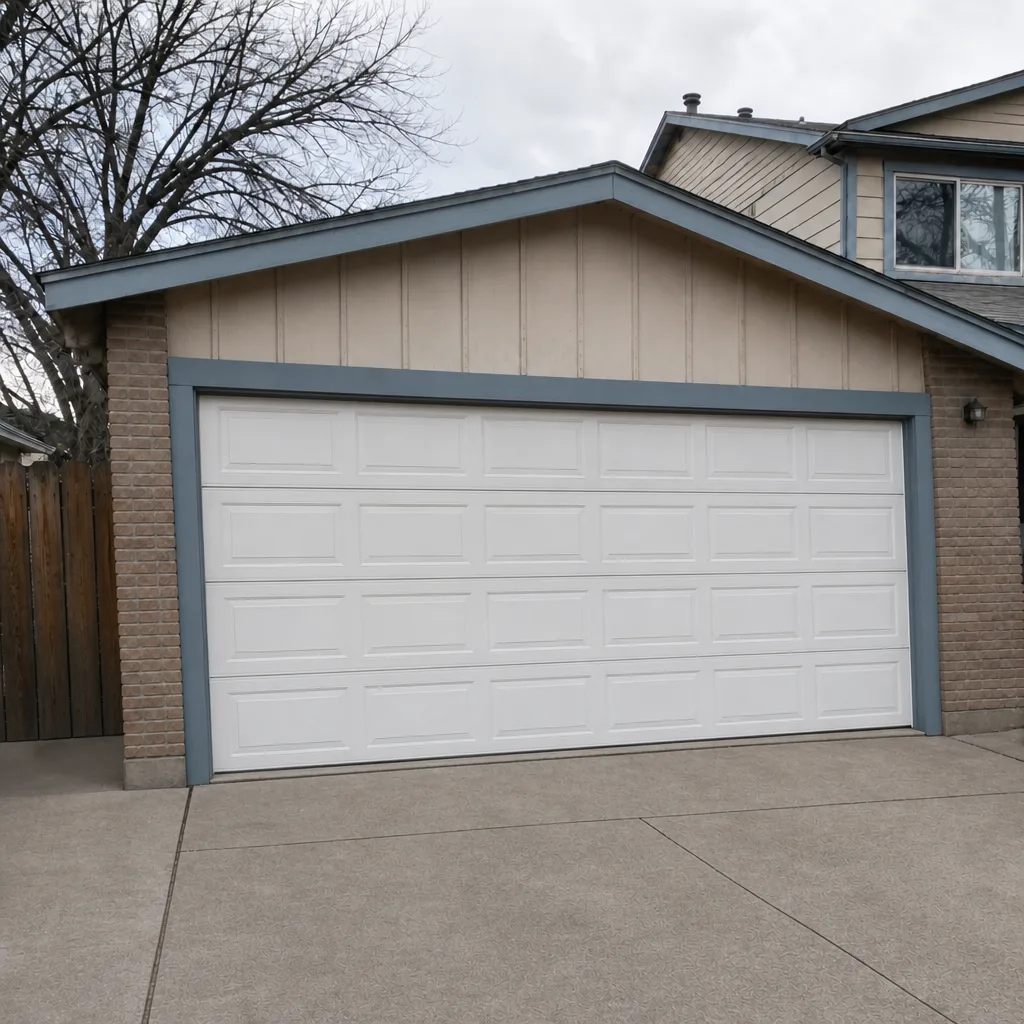
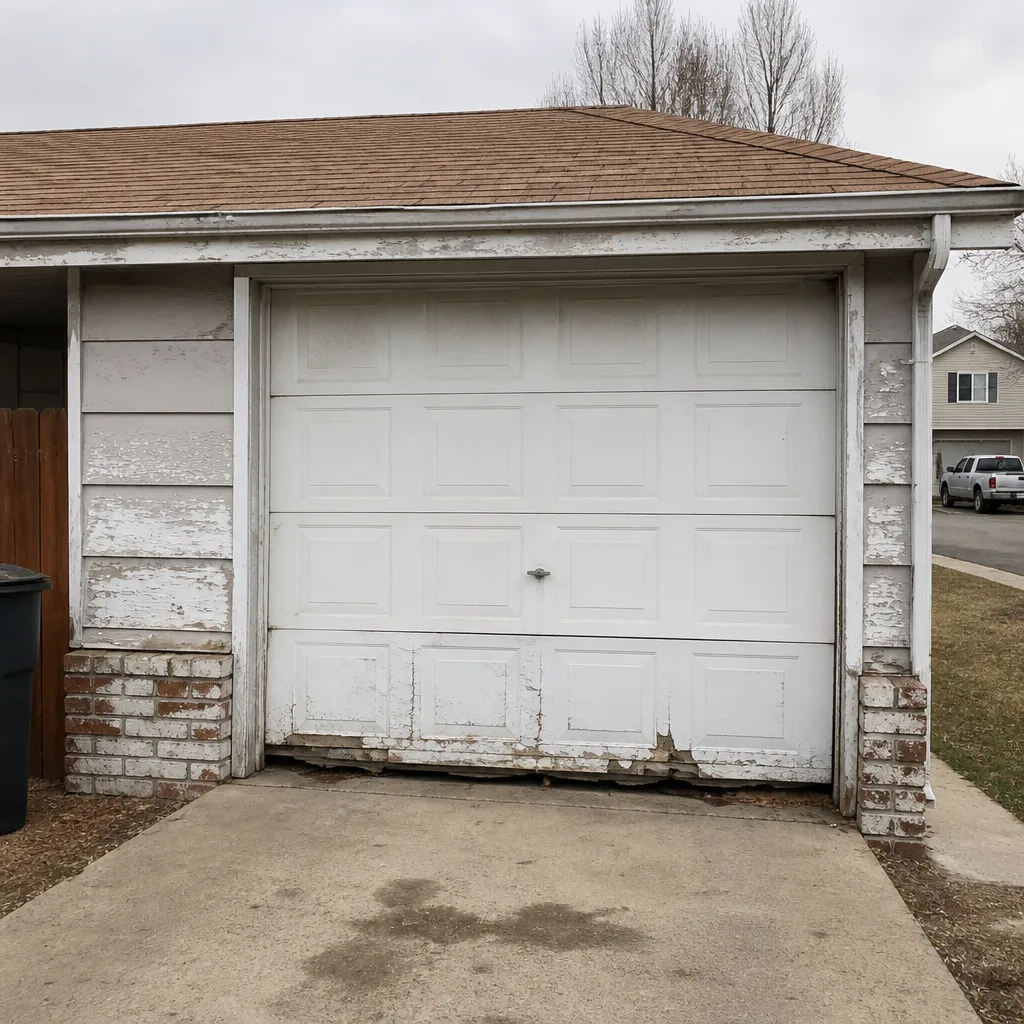
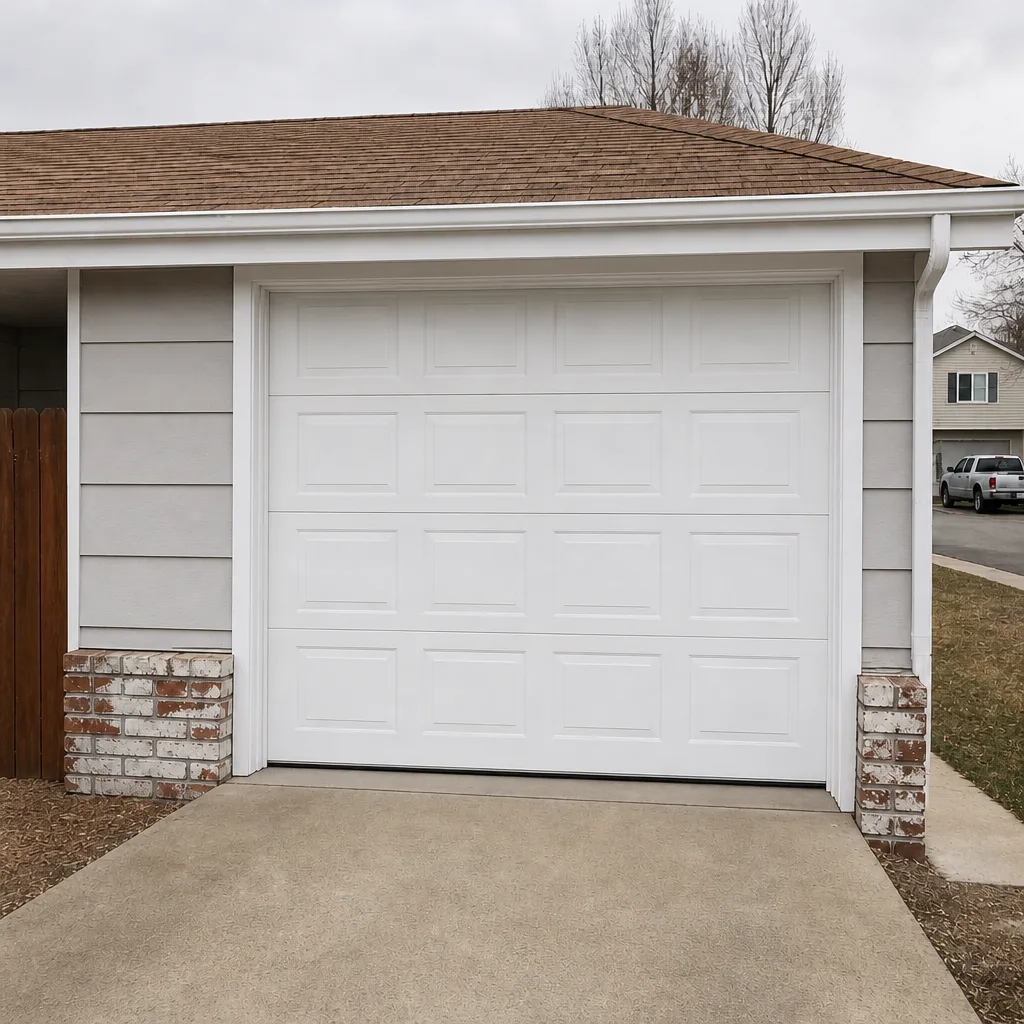
See the difference
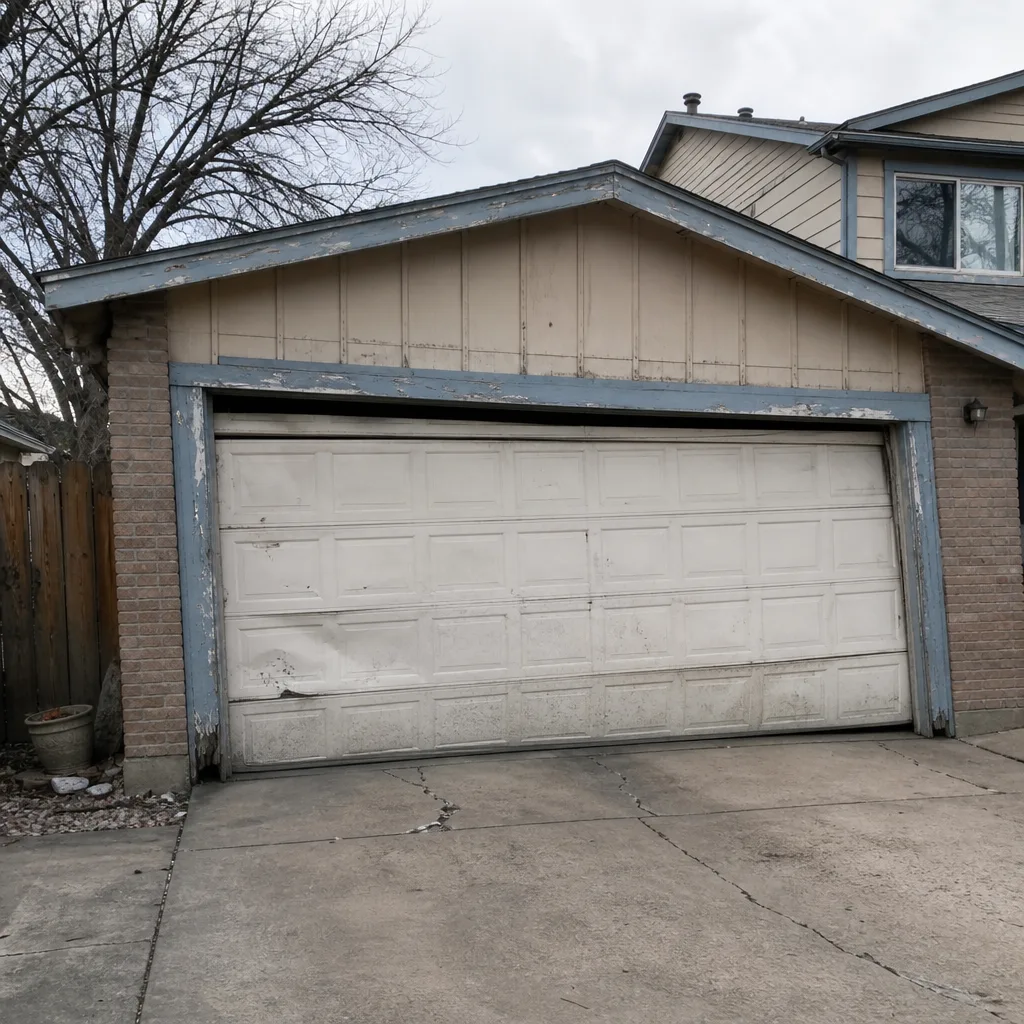 Before
 After
 Before
 After
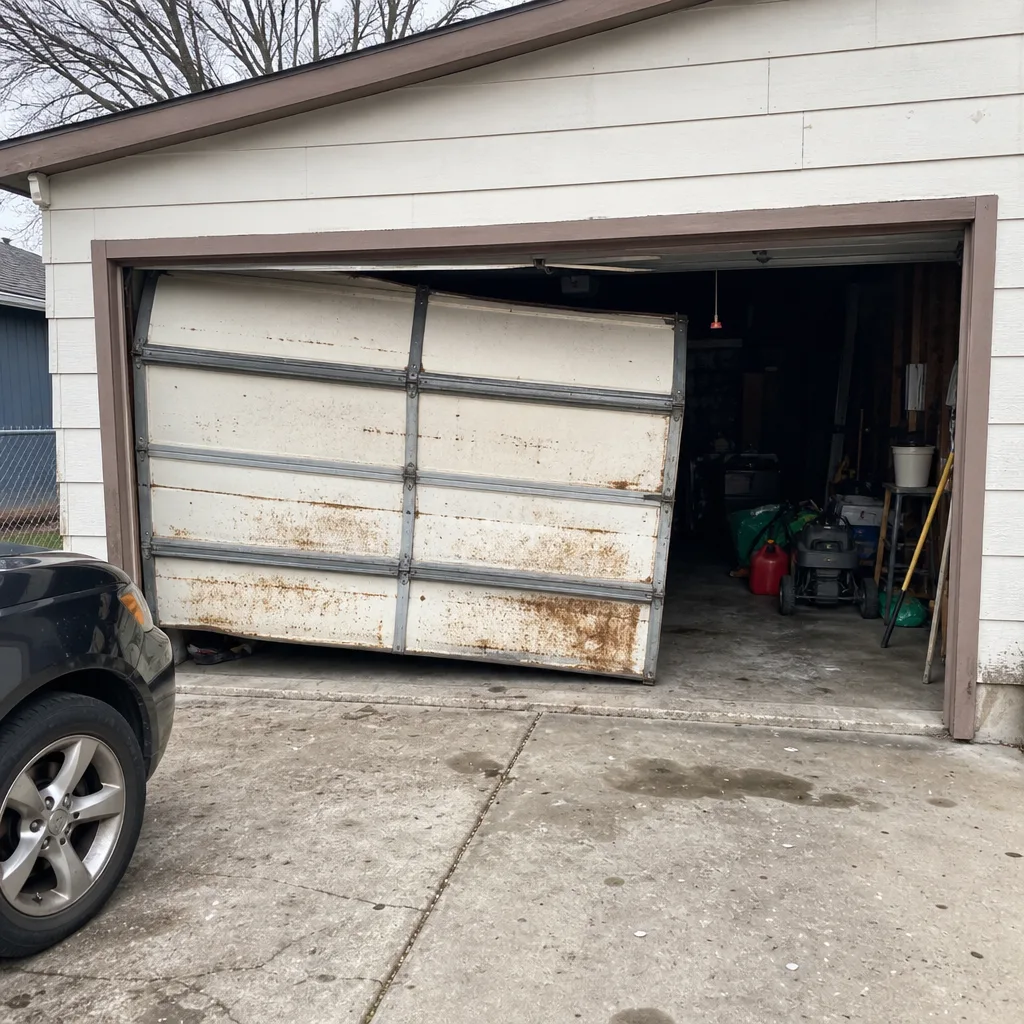 Before
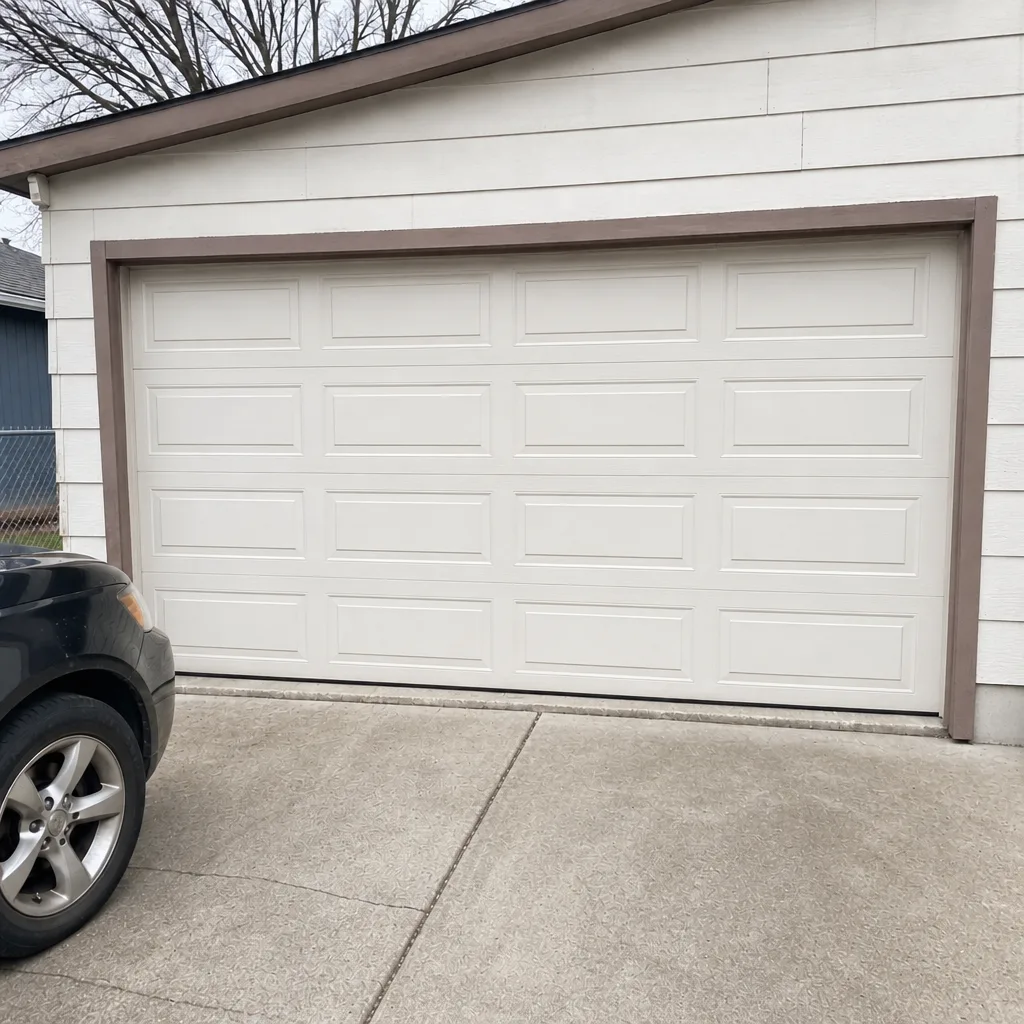 After
When to Call a Professional
Call a professional when you find a Tier 3 sign, when a Tier 2 sign doesn’t improve after a tune-up, when the door is off balance, or when the opener replaces symptom after symptom without resolving the lift. Also call if the door reverses on its own, if a panel is bent, or if you’ve found rust scaling on a spring that’s still working. Those are all signs that a component is closer to failure than it looks. Our technicians have up to 12 years of experience with spring repair, cable work, opener diagnostics, and full replacements, so one call covers whatever you find. Thornton Garage Door Repair Pros offers free estimates in Thornton. Call (866) 947-9572 and we’ll book a time that works.
Frequently Asked Questions
The most serious are a snapped spring, a cable off its drum, a door hanging crooked, and a door that reverses without an obstruction. These are Tier 3 signs, meaning stop using the door. Springs and cables hold the door’s weight, and a door that reverses on its own has a safety system problem that can crush something in the path. Call a technician before the door moves again. Call (866) 947-9572 for an exact quote, and estimates are free.
No. Springs and cables are under extreme tension and can release stored energy instantly. Spring repair is a job for a trained technician with the right tools and safety discipline. If you’ve found a snapped spring or a cable off its drum, stop using the door and call us. We answer 24/7 and fast dispatch runs 7am to 7pm, Sunday through Friday.
Yes. A slower door usually means the torsion spring has lost tension, which means the opener is carrying more of the door’s weight. Left alone, the opener will wear out alongside the spring and you’ll replace both instead of one. It’s a Tier 2 sign: schedule it soon, before the door stops lifting. Call (866) 947-9572 for an estimate.
Cold stiffens lubricant, contracts metal, and makes worn parts less forgiving. A door that ran smoothly in July can grind and squeal in January because the small problems were always there, the warm weather just hid them. Fall is the right time to catch those signs before the first hard freeze. If your door is already noisy, call (866) 947-9572 and we’ll set up a visit.
No. The written estimate sets the price, and we quote it before any work starts. If we find something the estimate didn’t cover, we’ll talk it through with you and get your approval before proceeding. Call (866) 947-9572 for an exact quote on your door.
Yes. We service the leading residential brands, including Genie, Clopay, Amarr, Wayne Dalton, LiftMaster, Chamberlain, Craftsman, and Raynor. We work on whatever’s already on your garage, so you don’t have to worry about compatibility. Call (866) 947-9572 to schedule.
The local pro we connect you with is licensed and insured as the state requires. Our technicians have up to 12 years of experience with spring repair, opener diagnostics, and full installations. Call (866) 947-9572 to book.
The Bottom Line
Garage door warning signs aren’t all equal, and the reason they matter is mechanical. Some are friction: a squeak, a compressed seal, a dry hinge, all safe to watch or fix yourself. Some are load-bearing: a slow door, a grinding roller, a frayed cable, all signs that a component is wearing toward failure and needs a technician soon. Some are failures: a snapped spring, a cable off its drum, a door that reverses on its own, all cases where the door should stop moving today. In Thornton’s climate, the warm months hide the early signs and the cold months amplify them, so the shoulder seasons are your best window to catch a problem before winter. If you find a Tier 2 or Tier 3 sign, call us. One call covers repair, opener diagnostics, spring replacement, and new installation, and the price is quoted before any work starts.
If you’ve found a warning sign on your door and aren’t sure how serious it is, call Thornton Garage Door Repair Pros at (866) 947-9572 for a free estimate. We answer 24/7, with fast dispatch from 7am to 7pm, Sunday through Friday. See our Thornton Garage Door Repair Pros page for the full range of services.
Written by the team at Thornton Garage Door Repair Pros.