
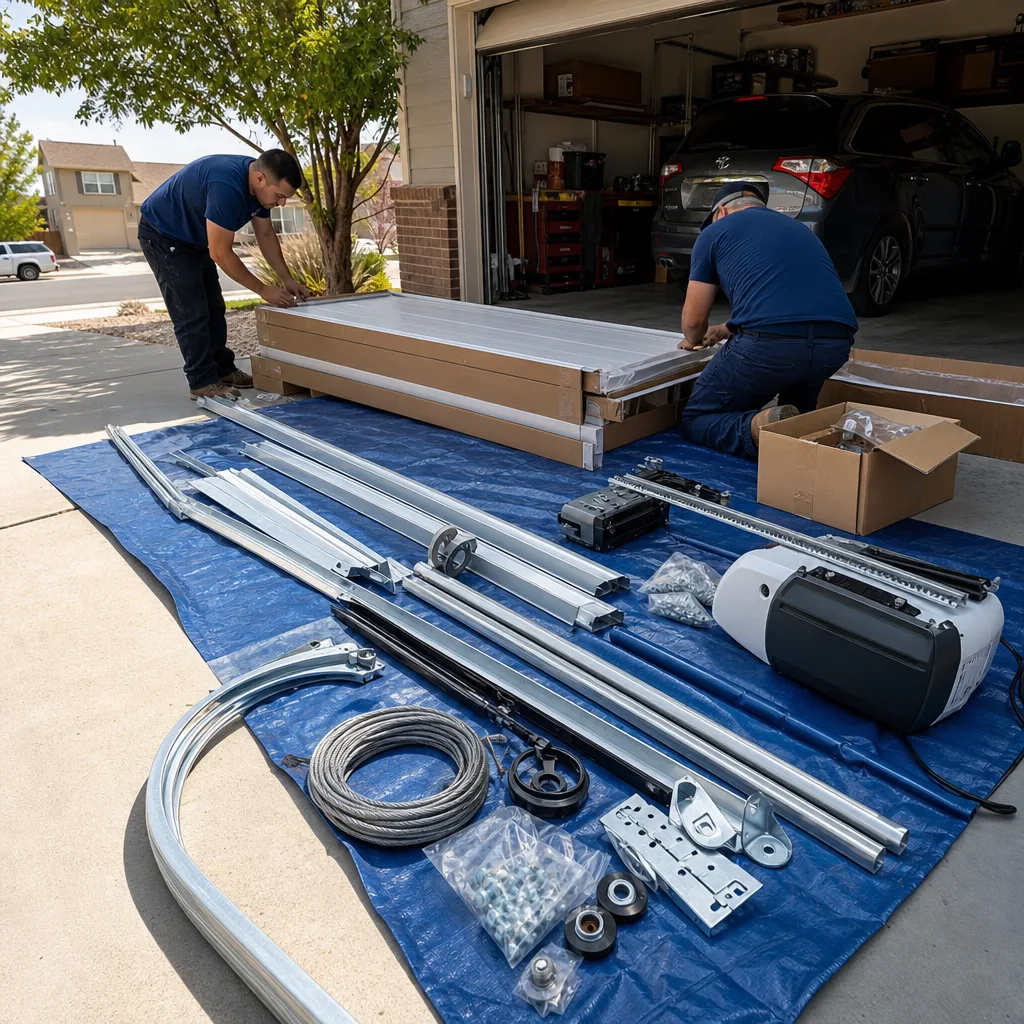
Last updated November 23, 2026
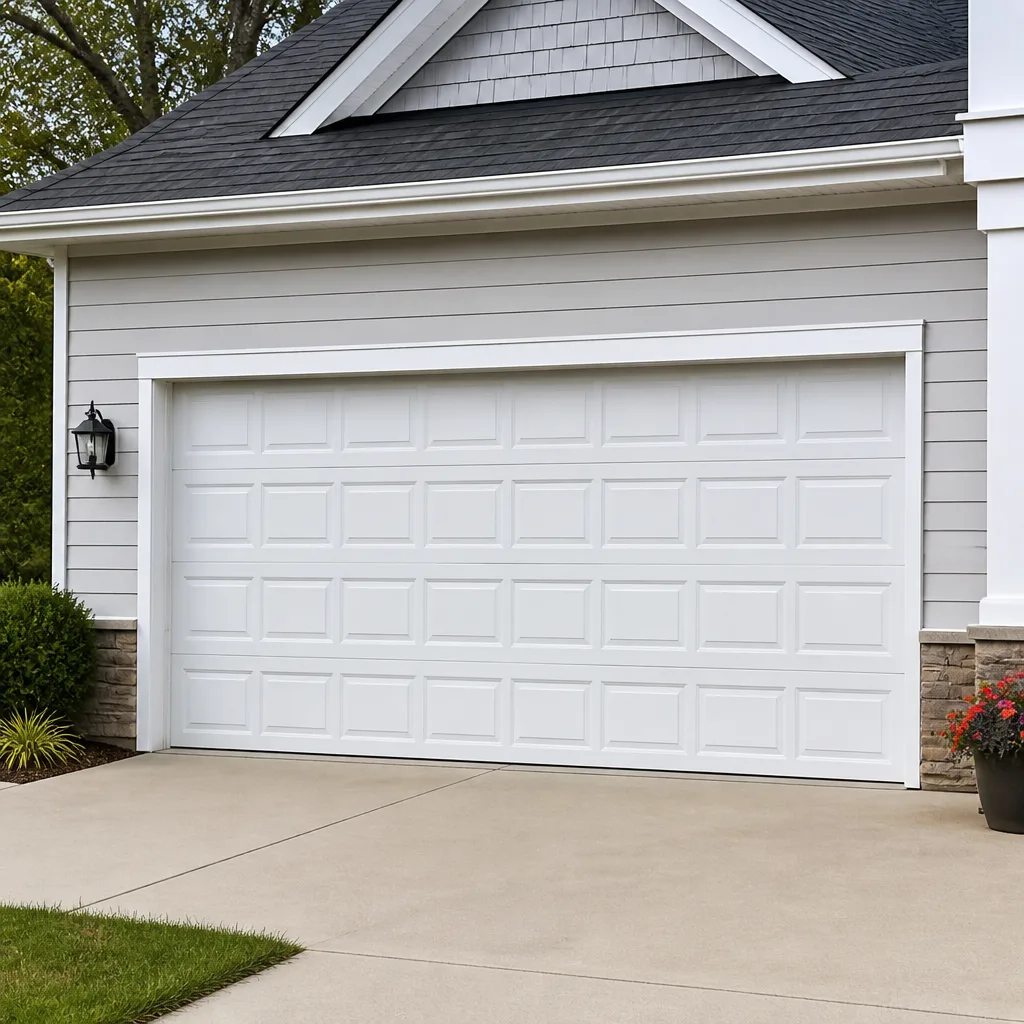 Raised-panel steel
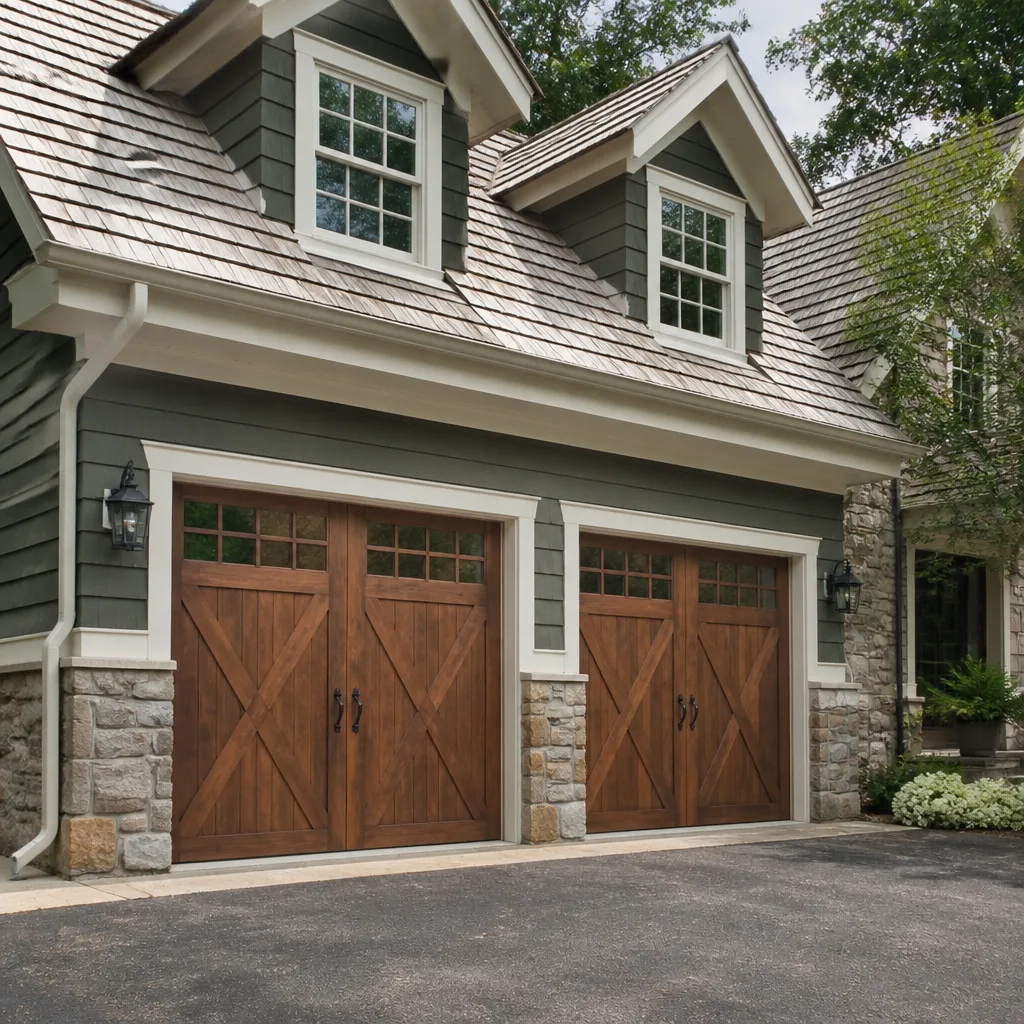 Carriage house
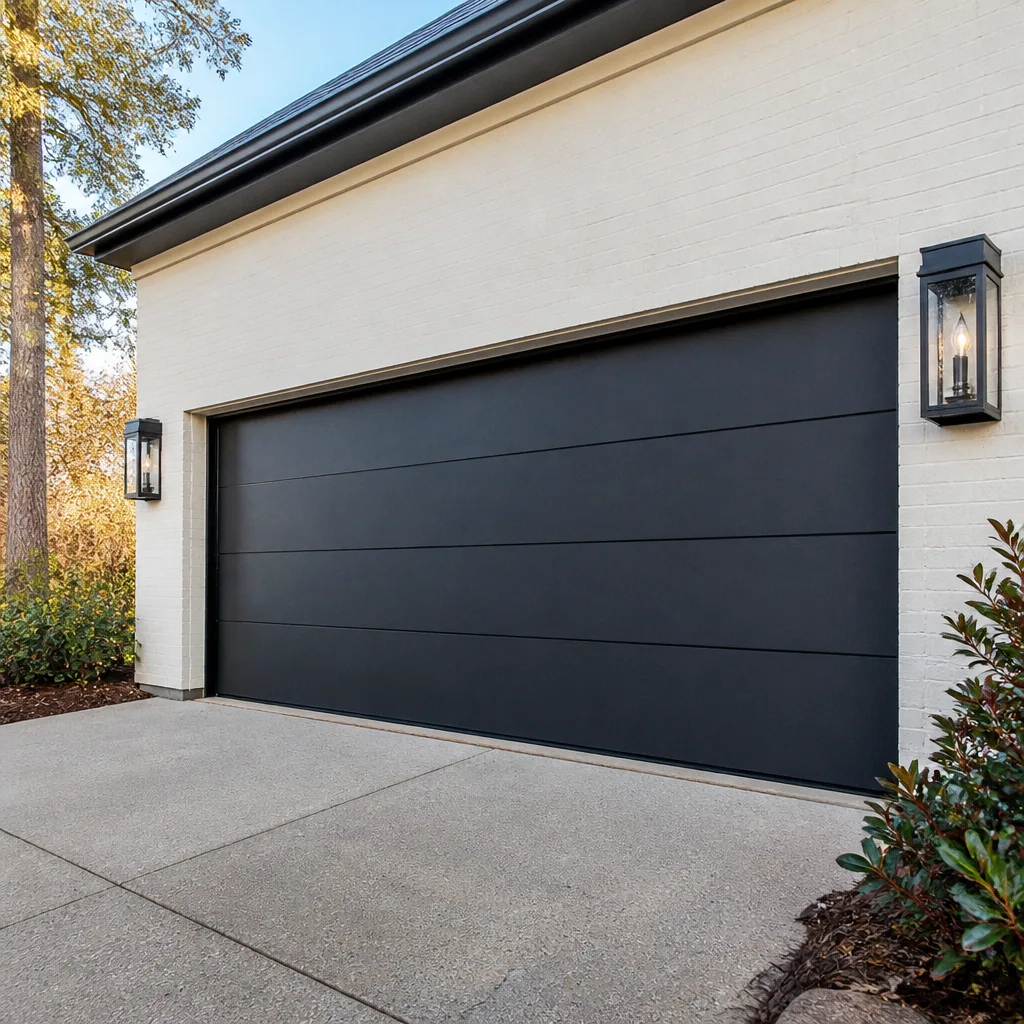 Modern flush
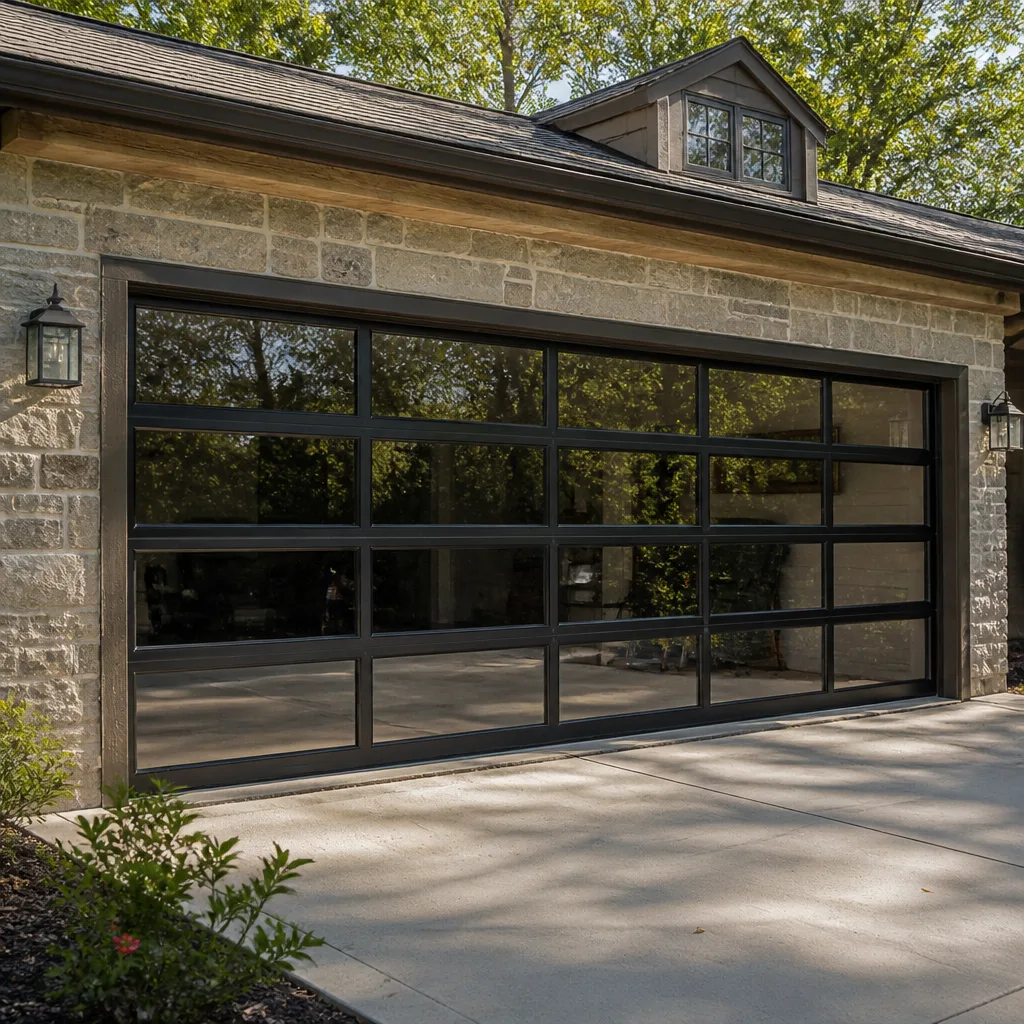 Full-view glass
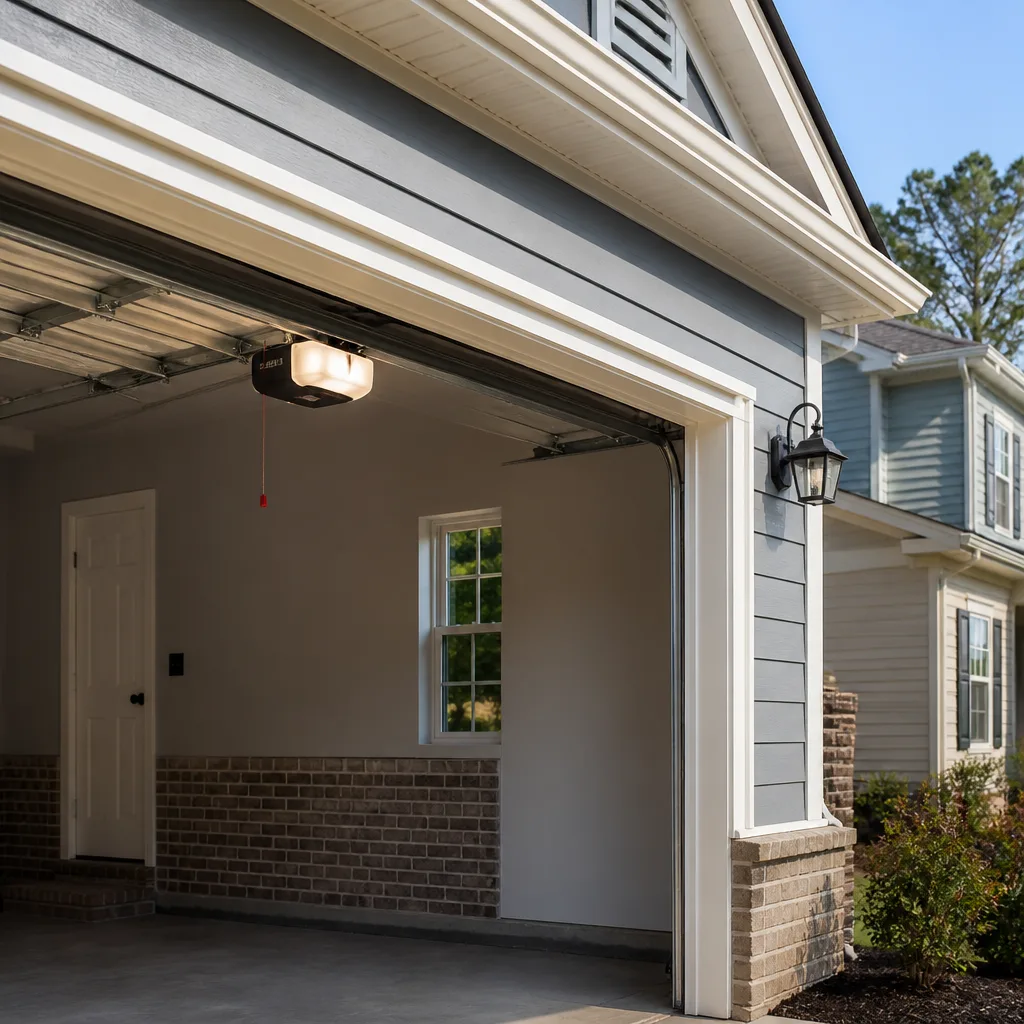 LiftMaster openers
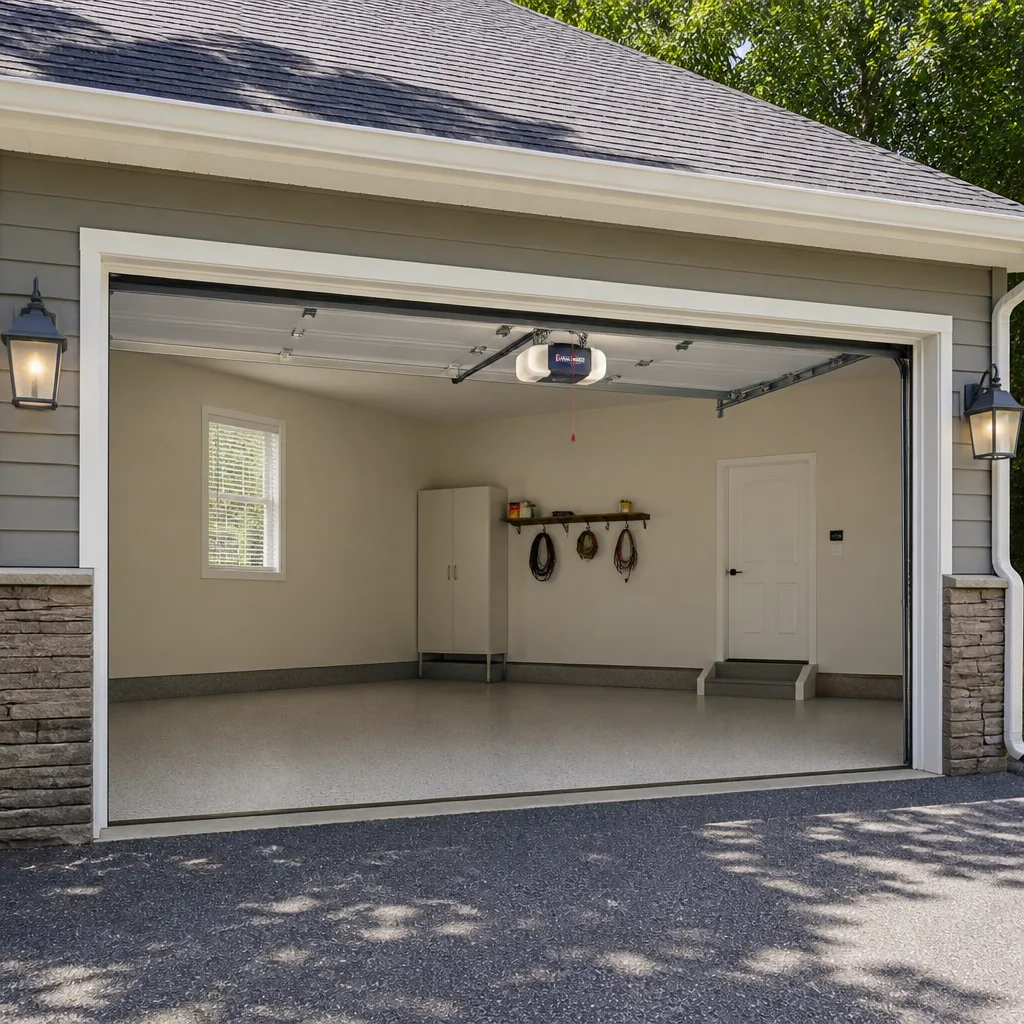 Chamberlain openers
Full 25-point door and opener safety check with every visit - springs, cables, rollers, tracks, and your LiftMaster or Chamberlain opener included
You get a price before we start. It does not change when the pro arrives.
Get your free estimateGarage Door Repair Maintenance Checklist for Thornton Homeowners
Lubricating your garage door tracks is one of the most repeated pieces of advice online, and it’s wrong. Tracks are meant to stay dry. The moving parts that ride inside them – the rollers and hinges – are what need lubrication, and mixing up the two causes more binding problems than it prevents. In our experience, a greasy track collects grit, the rollers start to skid instead of roll, and the door gets louder and harder to lift over time. This guide fixes that advice and goes further: the exact parts to inspect on a Thornton door, the measurements that signal wear, what gets grease and what gets nothing, and which seasonal checks actually matter in Colorado’s freeze-thaw cycle.
Quick Answer
A useful garage door maintenance checklist for a Thornton home covers four things: a monthly visual check of springs, cables, and rollers; lubrication of rollers, hinges, and the opener’s drive screw or chain (never the tracks); a 60-second balance test; and a safety reversal test for your opener. Most of it takes under 15 minutes. Twice a year, before the first hard freeze and again in spring, add a closer inspection of spring tension and cable condition. If the door drifts more than 2 inches when you let go halfway up, stop using it and have the springs checked.
Styles & brands we work with
- Raised-panel steel
- Carriage house
- Modern flush
- Full-view glass
- LiftMaster openers
- Chamberlain openers
Table of Contents
- The Monthly Walk-Around: What to Look At and What to Skip
- Springs and Cables: The Two Parts You Inspect But Never Touch
- The Correct Lubrication Map for Your Garage Door
- How to Test Your Door’s Balance in Under 60 Seconds
- Safety Reversal Testing by Opener Brand
- Seasonal Garage Door Timing for Thornton’s Climate
- What Brand-Specific Maintenance Actually Looks Like
- Common Mistakes to Avoid
The Monthly Walk-Around: What to Look At and What to Skip
A monthly garage door check in Thornton isn’t a repair session. It’s a look, a listen, and a note of anything that changed since last month. Ten to fifteen minutes with a flashlight covers it. The goal is to catch wear while it’s still cheap to fix, before a stretched cable or worn roller turns into a door that won’t close on a cold morning when you need to get to work.
Here’s the order we recommend, starting from the floor and working up:
- Stand outside and look at the door closed. Are the panels level across the bottom? Is the bottom seal touching the floor evenly, or is there a gap at one corner? A door that sits crooked is telling you something about the springs or the track alignment.
- Look at the rollers from the inside. You’ll see them in the hinges. Steel rollers should be round and turn freely. Nylon rollers should look smooth, not cracked or flattened on one side.
- Check the hinges for loose screws and cracks. Hinges take a lot of load. A cracked hinge is a hinge about to fail.
- Inspect the cables running up each side to the drum. Look for fraying, kinks, or a cable that’s come out of its groove.
- Look at the springs above the door. We cover what to look for in the next section. Here, just note rust, gaps, or anything that looks different from last month.
- Run the door and listen. A door that used to be quiet and now grinds, squeaks, or thumps is telling you a part is wearing. Note the location of the sound.
What to skip: don’t climb a ladder to inspect the opener up close, don’t spray anything, and don’t try to adjust the track with a hammer. Track adjustments are fussier than they look, and a track knocked out of plumb causes more problems than it solves. In Thornton, where summer heat and winter cold both move the framing a little, a track that’s slightly out of alignment is common, but it should be corrected with proper tools and a straightedge, not improvised.
Springs and Cables: The Two Parts You Inspect But Never Touch
Garage door springs and cables are under extreme tension at all times. This is not a DIY repair, and it’s the one part of routine maintenance where the correct instruction is to look carefully and then leave it alone. A torsion spring stores enough energy to cause serious injury if it releases unexpectedly. That’s why spring repair is a dedicated service for us, not an afterthought – handling it safely requires specific tools and training.
What to look for on the springs:
- Gaps in the coil. A healthy torsion spring is a tight, even coil. If you can see a visible gap between windings, the spring has stretched and is losing tension. It hasn’t failed yet, but it’s on its way.
- Rust pitting. Small rust spots are common in Colorado’s dry climate, but deep pitting weakens the wire. Pitting concentrated in one area is the spot most likely to break.
- Color coding. Torsion springs are painted a color that indicates their wire gauge and length. If the paint on one spring is faded or gone and the other isn’t, that tells you something about wear.
- An uneven door. If the door lifts higher on one side, one spring is doing more work than the other. That’s a wear signal, not just a cosmetic issue.
What to look for on the cables:
- Fraying at the drum. The cable wraps around a drum at the top of each side. Where it winds, individual wires can break and fray. Any fraying means the cable needs replacing.
- Kinks or birdcaging. A cable with a kink or a section that’s spread apart has been overloaded. It’s not safe to keep running the door on it.
- Cables off the drum groove. If a cable has jumped its groove, the drum will bind. This is a stop-and-call situation.
- Loose cable at the bottom bracket. The cable attaches to the bottom bracket with a loop. If the loop looks stretched or the cable is slack on that side, have it checked.
What you never do: never unwind, cut, or adjust a spring or cable yourself. Never try to wind a torsion spring with a screwdriver or pliers. If you see signs of failure on either part, close the door (if it’s safe) and call a professional. For the repair itself, our garage door spring repair covers the safe inspection and replacement of both torsion and extension springs.
The Correct Lubrication Map for Your Garage Door
This is where most online advice goes wrong. Tracks should not be lubricated. They’re designed to be dry so the rollers roll rather than slide. Grease on a track turns into a grit magnet: dust from the air, grit from the road, and Leaf debris all stick to it, and the rollers start to bind. A noisy door is usually a lubrication problem, but the fix is to lubricate the right parts, not all of them.
Here’s the map:
- Rollers: a light spray of white lithium grease or silicone spray on the roller bearing, not on the roller’s rolling surface. A dry silicone spray is generally the better choice for nylon rollers; lithium grease works for steel bearings. If your rollers have no bearing (cheap steel rollers), a light oil is acceptable.
- Hinges: one drop of white lithium grease or a quality garage door lubricant at each pivot point. Wipe off the excess. Hinges squeak because the metal-on-metal contact has dried out.
- Springs: a light coat of garage door lubricant on the coil, applied with the door closed. This helps slow rust. Do not use grease on a torsion spring; it traps grit in the winding.
- Opener drive screw (if your opener uses one): a small amount of lithium grease on the screw, per the manufacturer’s instructions. LiftMaster and Chamberlain screw-drive openers need this; belt and chain drives don’t have a screw.
- Opener chain or belt (if your opener uses one): a light coat of chain lube on a chain. Belts get nothing.
- Weatherstripping and bottom seal: a silicone spray to keep the rubber pliable. This is especially important in Thornton’s dry winters, where rubber can crack faster than you’d expect.
- Tracks: nothing. Wipe them down with a dry cloth if they’re dirty. If you’ve already greased them, clean them with a rag and a little degreaser, then leave them dry.
Product names worth looking for: a silicone-based garage door lubricant (often sold as “garage door lube” or “silicone spray”), white lithium grease in a spray can, and a chain and cable lubricant for openers. Avoid WD-40 as a long-term lubricant – it’s a penetrating oil and solvent, and it evaporates, leaving the parts dry. Avoid motor oil, cooking spray, and anything that stays tacky.
How often: lubricate the moving parts (rollers, hinges, springs) every six months, and anytime the door gets noticeably noisier. In Thornton, we suggest doing it once in fall before the first freeze and once in spring. The dry climate means less rust than a coastal market, but the temperature swings make the rubber and the lubricant both work harder.
How to Test Your Door’s Balance in Under 60 Seconds
A balanced door should stay put at any point in its travel when you let go. If it drifts, the springs are out of adjustment or losing tension. This test takes less than a minute and tells you more about your door’s health than almost any other single check.
Here’s how:
- Disconnect the opener. Pull the red release handle (or the manual release cord) hanging from the opener rail. The door is now on manual. Make sure no one is standing under the door.
- Raise the door by hand to about halfway. Use a firm, even pull. The door should feel light for its size. If you have to strain, stop – the springs are doing too little work, and the door is heavier than it should be.
- Let go and watch. A balanced door stays where you left it. A door that drops more than 2 inches has spring tension that’s too low. A door that drifts up on its own has tension that’s too high.
- Reconnect the opener and test the door with the opener once more. If it moved smoothly, your balance is fine.
What the results mean:
- Drifts down more than 2 inches: the springs are undersprung. This is the most common result and usually means the springs have stretched or one has weakened. Have them checked before cold weather – a door that’s heavy in warm weather gets heavier in the cold.
- Drifts up: the springs are oversprung or the tension was set too high at the last adjustment. This puts excess load on the opener and the tracks.
- Stays put: balanced. Run the test again in six months, or whenever the door starts to feel different.
One caveat: if the door is heavy or the spring looks broken, don’t run the test. A door with a snapped spring is dangerous to lift by hand, and the right move is to close it and call. If you’re not comfortable with the manual release, our garage door repair service can check balance and tension on a service call.
Safety Reversal Testing by Opener Brand
The safety reversal feature is the most important safety system on an automatic garage door. It’s the mechanism that stops and reverses the door when it hits an object. Every major opener has one, and every one of them should be tested monthly. The way you test it varies a little by brand and opener type, but the pass criteria are the same.
What “pass” means for all brands: when the door strikes an object, it reverses and travels back up without crushing it. When the door is closing and you break the beam with your foot, it reverses and goes back up. If either of those doesn’t happen, the door needs service before you use it again.
How to test the contact reversal:
- Lay a 2×4 flat on the floor in the middle of the opening, or hold your hand under the door as it closes – only do this if you can pull your hand away quickly. The board is safer.
- Close the door with the opener or the wall control.
- When the door hits the board, it should stop and reverse to the open position. If it stops and stays down, or pushes the board without reversing, the opener’s force setting or the reversal mechanism needs attention.
- Remove the board and run the door fully up and down once to confirm normal operation.
How to test the photo-eye reversal:
- With the door open, find the two photo-eye sensors at the bottom of the tracks. The lights on them should be solid, not blinking.
- Press the wall control to close the door, and while it’s closing, pass your hand or a long object through the beam.
- The door should reverse immediately. If one sensor’s light is blinking or off, the alignment or wiring needs attention.
Brand notes:
- LiftMaster and Chamberlain: both use the same MyQ-compatible control ecosystem, and the wall control usually has a diagnostic code display. If the safety reversal fails, check the manual for the error code, and check the photo-eye alignment first. A blinking sensor is usually a misaligned one.
- Genie: Genie openers often have the photo-eye sensors on a bracket that can be knocked loose during a door adjustment. Re-align the sensors until both lights are solid, then retest.
- Craftsman and Raynor: Craftsman openers are closely related to Chamberlain designs, so the test is the same. Raynor openers vary more by model; check the manual for the specific force and reversal settings on yours.
If the door fails either test, don’t keep closing it. A door that won’t reverse can injure a person, a pet, or damage the door and opener. Call for service. Our garage door opener repair covers diagnostics for all these brands.
Seasonal Garage Door Timing for Thornton’s Climate
Thornton’s climate does two specific things to a garage door: summer heat expands the door, the tracks, and the framing, and winter cold contracts everything and hardens the rubber. The freeze-thaw cycle at the shoulder seasons moves the ground the slab sits on. That means the two critical maintenance moments here aren’t spring and fall in the generic national sense. They’re before the first hard freeze and after the last one.
Fall, before the first freeze:
- Get the balance and spring tension checked. A door that’s slightly heavy in summer gets noticeably heavier in cold weather, and the opener works harder.
- Lubricate the moving parts with a cold-rated lubricant. Some light oils thicken in the cold; a proper garage door lubricant stays effective.
- Check the bottom seal for cracks. A cracked seal lets cold air and snowmelt into the garage and can tear further when it freezes to the floor.
- Test the safety reversal. Cold can affect the force sensitivity of the opener, and a door that reverses fine in summer may not in winter.
Spring, after the last freeze:
- Re-check balance. If winter moved anything, spring is when you’ll see it.
- Inspect the tracks for misalignment. The slab and the framing shift over the winter, and a track that’s out of plumb will make the door drag.
- Look at the springs again for any new rust pitting or gaps that appeared over winter.
- Re-lubricate the moving parts, and clean the tracks with a dry cloth.
Thornton-specific timing: the first hard freeze in this part of Colorado usually comes in October, and the last one in April or May. Treat Labor Day and Memorial Day as your rough reminders for the fall and spring checks. That’s a little earlier than a generic “fall” checklist would suggest, and it matters because a spring that’s marginal in fall will often fail on the first cold morning. If your door is older, or if it’s a heavier insulated door on a LiftMaster or Chamberlain opener, the fall check is the one to prioritize.
Monthly checks fit in between: a visual look at the rollers and hinges, listening for new noises, and a quick reversal test. All of it together keeps the door working through the season that stresses it most.
What Brand-Specific Maintenance Actually Looks Like
Garage doors and openers are not interchangeable, and the maintenance details change with the brand and model. This matters because a general handyman who works on everything may not know the specifics of a Raynor opener’s force settings or the difference between a Wayne Dalton Torquemaster spring and a standard torsion setup. We’re trained on all eight of the major brands – LiftMaster, Chamberlain, Genie, Clopay, Amarr, Wayne Dalton, Craftsman, and Raynor – and it makes a practical difference.
A few examples:
- Wayne Dalton: some Wayne Dalton doors use a Torquemaster spring system, which is a different design than a standard torsion spring. The inspection points are different, and the balance test reads differently.
- Clopay and Amarr: these are door manufacturers, not opener brands. The door model determines the panel weight, which in turn determines how much spring tension the door needs. If you don’t know the door model, the spring spec can be wrong, which is why we look up the door before replacing a spring.
- LiftMaster and Chamberlain: the opener’s force and travel limits are set through the wall control, and the MyQ app can show you the door’s history. If your opener has a diagnostic code, the manual tells you what it means.
- Craftsman: Craftsman openers are common on older Thornton homes, and many are still working well. The key maintenance point is the chain or belt tension and the photo-eye alignment, which can drift.
What this means for your checklist: when you note the brand and model of your door and opener (there’s usually a label on the door panel and inside the opener’s light cover), you make every future service call faster and more accurate. Write them down on the inside of the garage wall or snap a photo. If you ever need garage door installation, those details also let us match the new door and opener to what your home actually needs.
Common Mistakes to Avoid
- Lubricating the tracks. This is the single most common mistake, and it’s the reason doors get noisy. Tracks stay dry; rollers and hinges get the lube. If you’ve already greased the tracks, clean them and leave them bare.
- Ignoring a door that drifts more than 2 inches. A balance test that fails means the springs are out of adjustment, and a door that’s heavy in Thornton’s summer gets heavier in winter. Get it checked before the cold sets in.
- Using WD-40 as a lubricant. It’s a solvent, not a long-term lubricant. It cleans and displaces moisture, but it evaporates, and the parts end up drier than before. Use a proper garage door lubricant.
- Trying to adjust or replace a spring yourself. Springs and cables are under extreme tension. This is the one part of maintenance that always belongs to a trained professional. There is no safe shortcut.
- Skipping the safety reversal test. It takes two minutes, and it’s the check that could prevent an injury. Test it monthly, and test it again after any adjustment to the door or opener.
- Assuming a door that opens quietly is fine. Quiet doors still have worn rollers and stretched springs. The monthly visual check catches problems that sound gives no warning about.
- Using the wrong lubricant for Colorado’s cold. A lubricant that works in a warm climate may thicken in a Thornton winter. Use a garage door-specific product rated for cold weather.
When to Call a Professional
Some garage door problems are maintenance issues. Others are stop-and-call situations. Call a professional if: your balance test shows the door drifting more than 2 inches; you see fraying cables, gaps in the springs, or deep rust pitting; the door fails the safety reversal test; the door is crooked, binds, or won’t close all the way; the opener makes grinding or clicking sounds; or you can see a broken spring. Also call if you aren’t sure what you’re looking at – a professional inspection is the safe way to find out. Thornton Garage Door Repair Pros offers free estimates in Thornton – call (866) 947-9572. We answer 24/7. Fast dispatch from 7am to 7pm, Sunday through Friday. Our technicians have up to 12 years of experience, they’re trained on all the major brands, and every job is priced by a written estimate before any work starts.
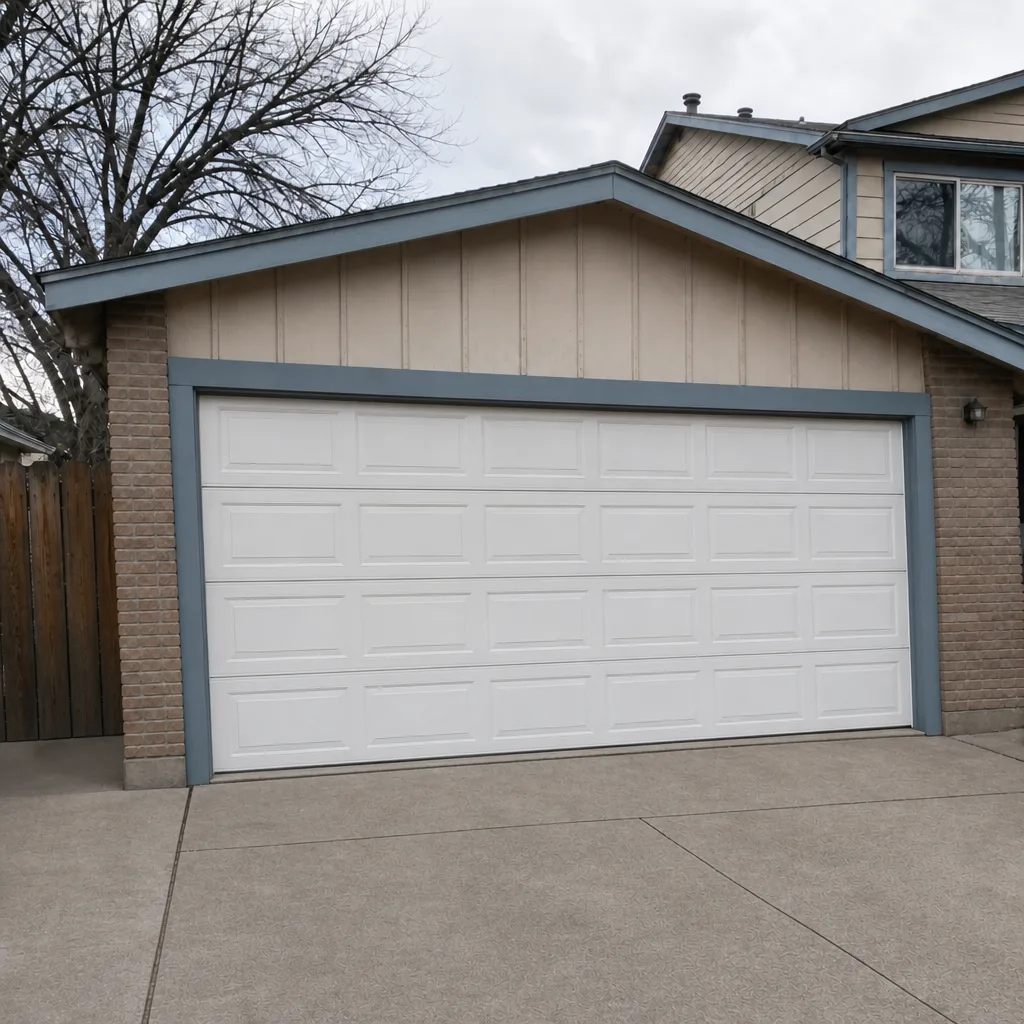
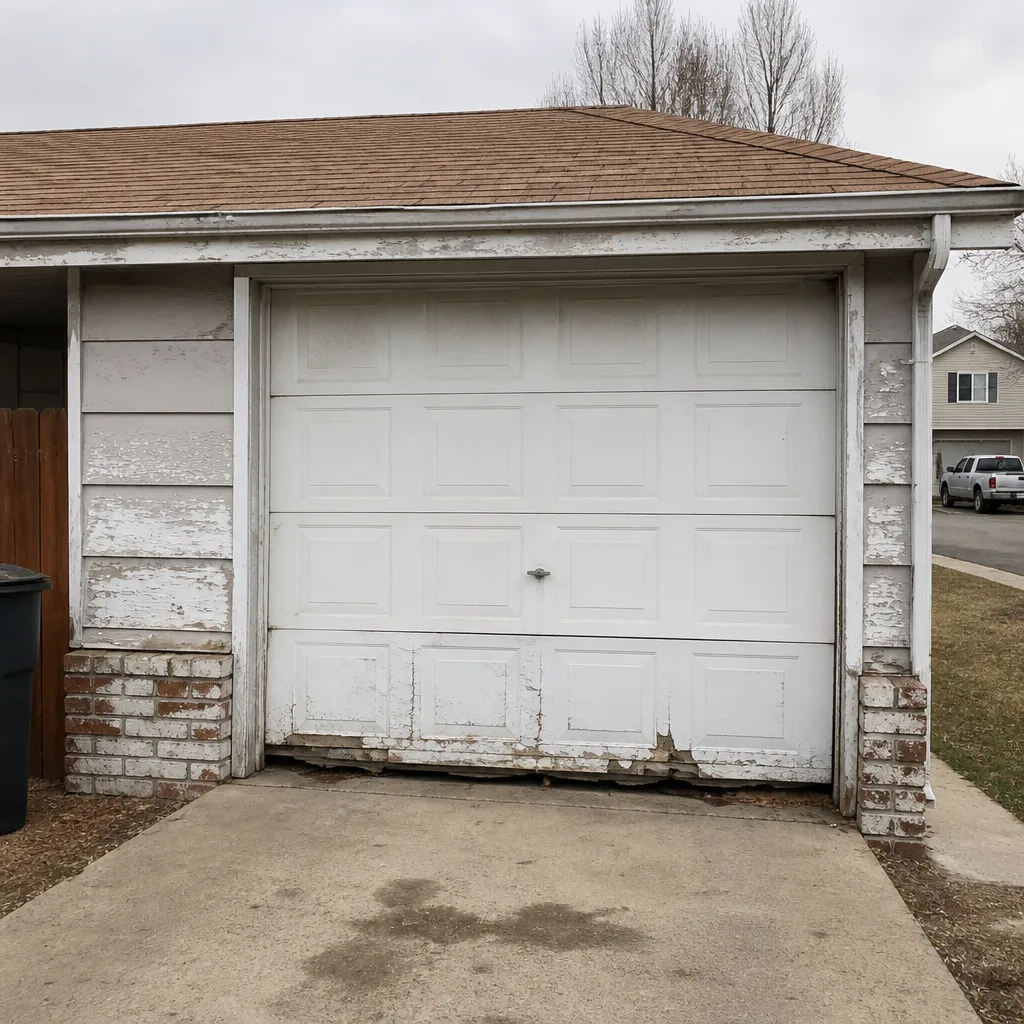
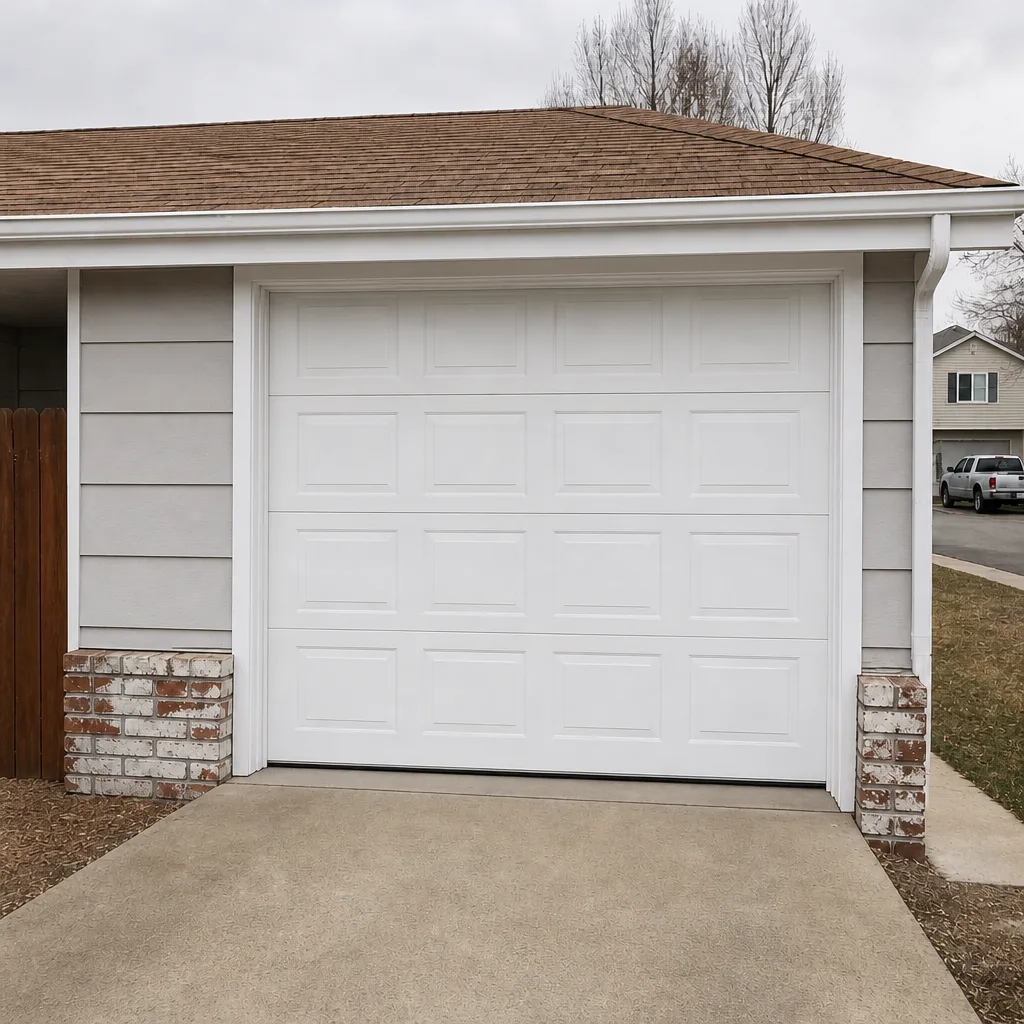
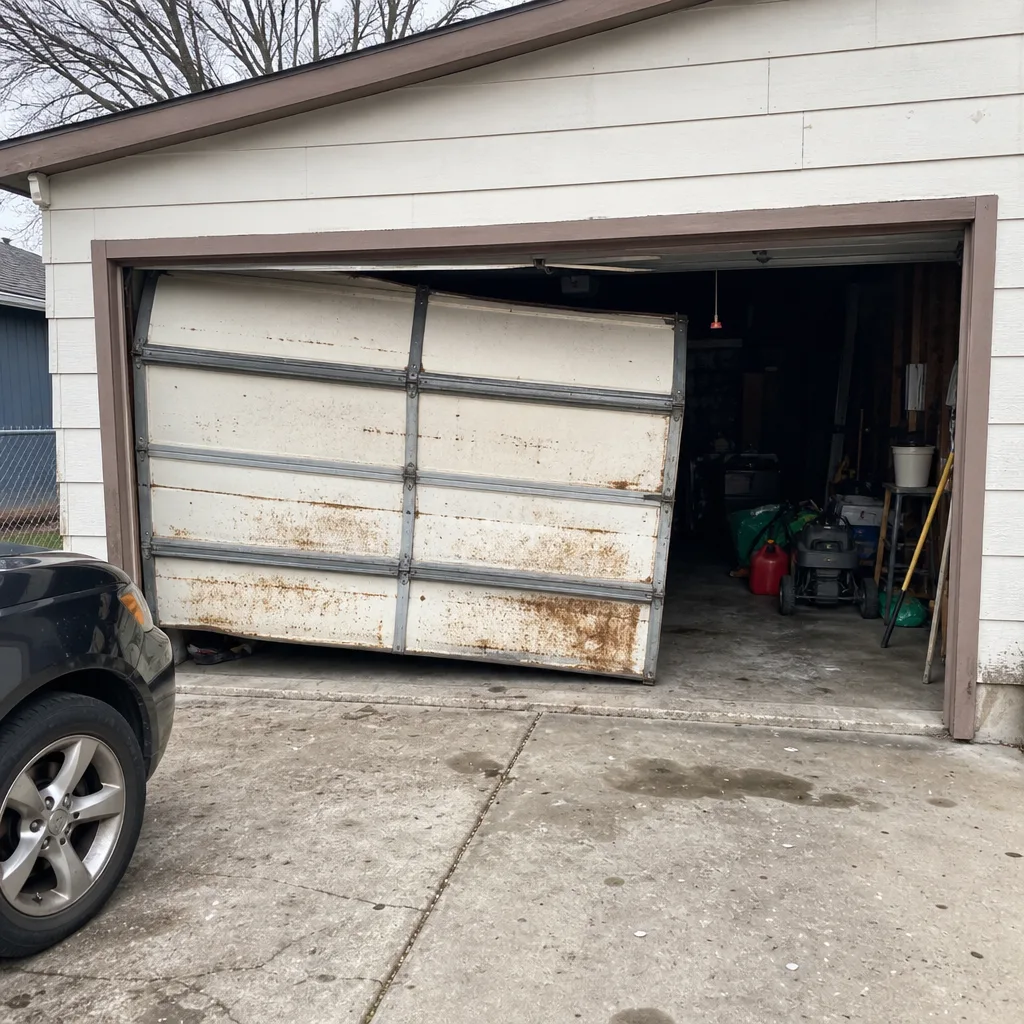
See the difference
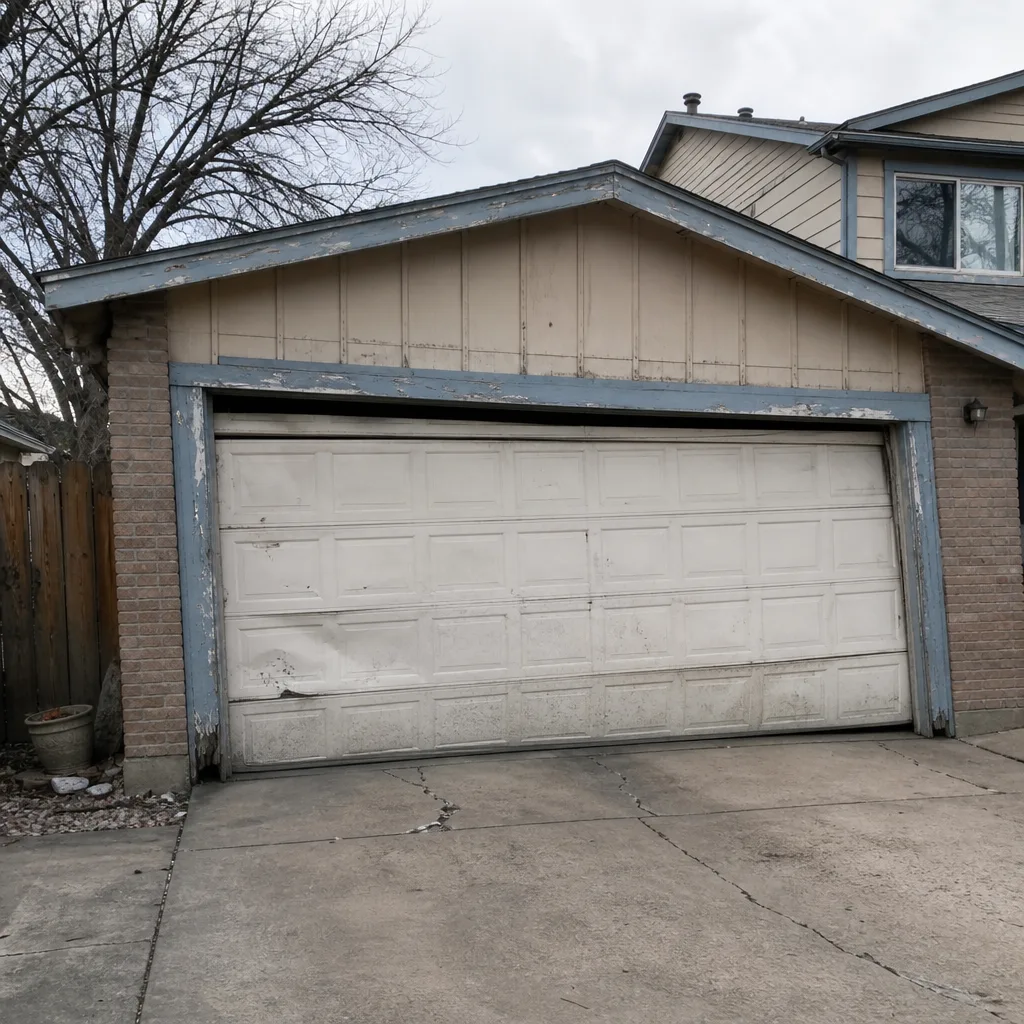 Before
 After
 Before
 After
 Before
 After
Frequently Asked Questions
Every six months, and anytime the door gets noticeably noisier. In Thornton’s climate, the best times are before the first freeze in fall and after the last one in spring. Lubricate rollers, hinges, springs, and the opener’s chain or screw – never the tracks.
It means the springs aren’t doing their share of the work. A door that drifts down more than 2 inches is undersprung or the spring tension has dropped, which is common as springs age. Have the springs and cables checked before the door gets heavy in cold weather. Call (866) 947-9572 for a free estimate.
No. Torsion and extension springs are under extreme tension, and releasing that tension without the right tools and training can cause serious injury. This is the one part of garage door maintenance that always belongs to a professional. Our dedicated spring repair service handles it safely.
Lay a 2×4 on the floor in the door’s path, close the door, and confirm it reverses when it hits the board. Then pass your hand through the photo-eye beam while the door is closing and confirm it reverses again. If either test fails, the opener needs service before you use the door again.
Most of the checklist is the same, but some Wayne Dalton doors use a Torquemaster spring system, which has different inspection points and a different balance test result. The door model matters. Our technicians are trained on Wayne Dalton, plus LiftMaster, Chamberlain, Genie, Clopay, Amarr, Craftsman, and Raynor, so the checklist gets adjusted to your specific system.
Yes, repair calls can often be handled the same day. Call (866) 947-9572. We answer 24/7. Fast dispatch from 7am to 7pm, Sunday through Friday. If you call outside dispatch hours, we’ll book you into the next opening.
The Bottom Line
A garage door maintenance checklist works when it’s specific. Check the springs for gaps and rust pitting, inspect the cables at the drum for fraying, and look at the rollers for flat spots. Lubricate the rollers, hinges, springs, and opener drive – never the tracks. Run the 60-second balance test monthly and act on a drift of more than 2 inches. Test the safety reversal on your opener every month. Time the deeper checks to Thornton’s freeze-thaw cycle: before the first freeze and after the last. If anything on the list looks wrong, or you’d rather have it checked properly, call a professional and get it done right.
Contact
If your garage door needs attention, whether it’s a routine check, a worn part, or a door that’s stopped working, we’re ready to help. Thornton Garage Door Repair Pros offers free estimates, and every job is priced by a written estimate before any work begins. Call (866) 947-9572. We answer 24/7. Fast dispatch from 7am to 7pm, Sunday through Friday. One call covers repair, opener diagnostics, spring work, and installation.
Written by the team at Thornton Garage Door Repair Pros.